
Dirk Perrin grew up on a farm in rural Oklahoma, the first from his immediate family to leave the area and the first engineer in his family.
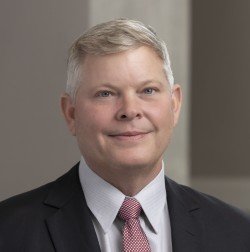
No silver bullet: Dirk Perrin on leadership, safety and CPChem’s largest plant
Dirk Perrin, Plant Manager, Cedar Bayou, Chevron Phillips Chemical
He arrived at the University of Oklahoma as a zoology pre-med student, switched to chemical engineering after his freshman year when he learned engineers had the highest acceptance rate into medical school, and then, early in his senior year, decided he was done with school and ready to work. A job offer from Phillips 66 in Pasadena, Texas finished the job.
"I got a job with Phillips 66 in Pasadena after I graduated and have never looked back," he said.
That was nearly 30 years ago. Today Perrin is plant manager at Chevron Phillips Chemical’s (CPChem) Cedar Bayou facility in the Baytown area. Cedar Bayou is CPChem’s largest manufacturing sites and one of the flagship facilities in the company’s global manufacturing network. Perrin’s road runs through Pasadena, Singapore, Qatar, Sweeny and back to Southeast Texas, and it has produced a leader whose philosophy is built on principles he has carried across three continents.
Building credibility through maintenance
Perrin’s early career was shaped by a role most engineers try to move through quickly. His time as maintenance manager gave him something later assignments built on.
"It helped me to really understand how the work gets done," he said. "It was the first time in my career that I was able to spend more time outside of the day-to-day firefighting and take a more strategic approach to address bigger, more complex issues. I learned that I really enjoyed solving the more difficult problems."
That appreciation for how work happens at the field level has defined his approach ever since. At Cedar Bayou, where he oversees roughly 2,200 employees and contractors across a 2,100-acre site producing approximately 4.5 billion pounds of product annually, he still spends about 30% of a typical week in field engagement and one-on-one conversations.
The facility converts ethane and propane feedstocks into polyethylene and normal alpha olefins, building blocks for food packaging, medical products, automotive components and consumer goods.
No silver bullet: Dirk Perrin on leadership, safety and CPChem’s largest plant
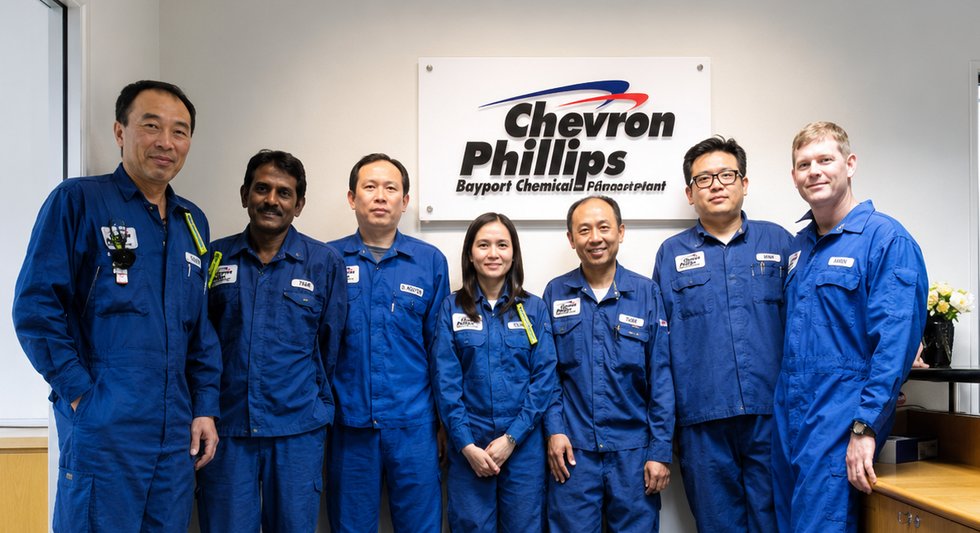
Perrin with CPChem’s D&I Council.
"What makes Cedar Bayou especially significant is the scale of the operation and the talent of the people who safely and reliably keep it running every day," Perrin said.
What three continents teach you
Before Cedar Bayou, Perrin served as plant manager in Singapore and then in Qatar. Both assignments reinforced something he had been working toward since his maintenance manager days.
"Effective leadership starts with trust," he said. "Leaders need to set clear expectations, define success and provide support, but they also need to empower people to do what they do best. Working with talented teams across different cultures helped me refine that approach and reminded me that great ideas can come from anywhere if you’re willing to listen."
That principle has not changed throughout his career. What has changed is his ability to measure it.
"You have to be clear with your team on what is important to you. What is important to you will become important to them. And this can’t be 50 things. To make real change, this list should be less than five."
Between Qatar and Cedar Bayou, he spent three years at CPChem’s Sweeny, Clemens and Old Ocean facility. The work he is most proud of from that period is reliability: older units and a struggling new unit addressed through focused effort, with significant improvements by the time he left.
No silver bullet: Dirk Perrin on leadership, safety and CPChem’s largest plant
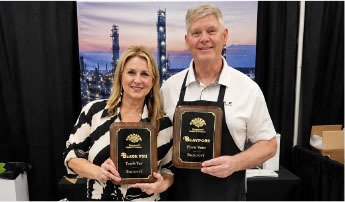
Perrin at the Baytown Chamber of Commerce Men Who Cook event.
He returned to the Baytown area in April 2023. His wife Ruth has deep roots here through years in the Goose Creek school district, and the community dimension of the role matters to him personally.
"When I meet with local stakeholders, I’m not just representing CPChem. I’m also a neighbor and community member. That creates a stronger connection and helps build trust."
Safety culture at field level
Every plant manager talks about safety culture. The ones who actually move the needle describe it differently.
"There is no silver bullet," Perrin said. "It takes a lot of work every single day. You have to show through your actions that nothing is more important than ensuring every single person is going home safe every day. You have to have 100% alignment with your contractors. You must have the field presence throughout your organization to know how work is being done. You have to act promptly on safety violations, improvement opportunities and near misses, and you need to have recognition programs for those that are doing more than the base expectations."
Managing the full scope of a plant like Cedar Bayou, with simultaneous accountability for safety, environmental performance, production, people and community, comes back to a lesson from his first department manager role.
"You can’t be a micromanager. If you are, you will fail."
On associations and the industry’s future
No silver bullet: Dirk Perrin on leadership, safety and CPChem’s largest plant
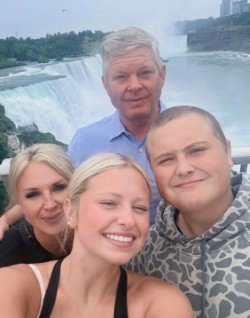
The Perrin family on vacation.
Outside the fence line, Perrin is active across the regional industry landscape. He has served on the Brazoria County Petrochemical Council’s board and currently serves as chair of the EHCMA board and on the Executive Council of the Texas Chemistry Council. He also serves on the University of Oklahoma’s Chemical Engineering Advisory Board.
"Knowing what is going on in the industry and being able to network with my peers that are going through the same challenges as CPChem is extremely valuable," he said.
On talent, his concern is simple: there are not enough engineers.
"Engineers solve problems. If we had more engineers working in more typical non-engineering careers, I believe the quality of life around the world would improve exponentially."
He is optimistic about Cedar Bayou’s longterm position.
"Southeast Texas remains one of the most competitive regions in the world because of its access to feedstocks, infrastructure, skilled workforce and strong industrial ecosystem. The companies that succeed will be those that operate safely, innovate continuously and adapt to changing market needs."
The one change he would make to how the industry operates is not technical.
"Our industry needs to be more community-facing. We are so fortunate here to have community support, and we must do everything we can to keep it that way. We need to do more to educate our community on our industry, the products we make, our economic impact, our safety culture."
That thread runs through everything he has described across nearly 30 years. The chemistry teacher who pointed him toward engineering. The maintenance role that taught him how work actually gets done. The international assignments that refined a philosophy of trust and empowerment. And now Cedar Bayou, with a conviction that the relationship between a plant and its community is as essential as any other operating variable. For someone who has always believed people are what make an operation work, that has never been a complicated conclusion to reach.
For more information, visit cpchem.com.