
It all started with his mother.
Nelson Rodriguez-Garcia will tell you that plainly. His mother looked at her son, saw his grades and natural aptitude, and told him engineering was going to be a good path. She said it with the kind of conviction that does not invite much debate. Nelson listened. Early on, he discovered that chemistry didn’t feel like work, and after high school, he enrolled at the University of Puerto Rico’s College of Engineering, the most prestigious public engineering program on the island at the time.
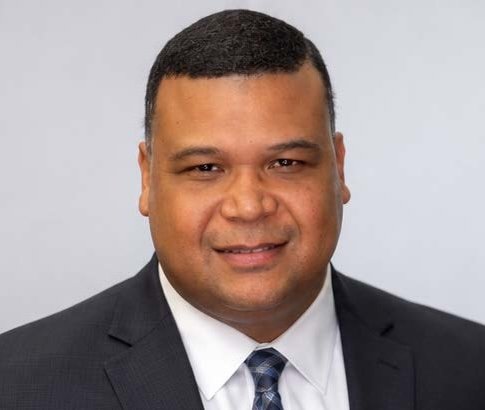
People first, product second: Nelson Rodriguez-Garcia on growth and leadership at Kuraray America
Nelson Rodriguez-Garcia, General Manager, EVAL Business Unit, Kuraray America
"Chemistry came very natural," he said. "Some of the other kids would give me a hard time because mentally it was like, okay, give me the next thing, I already got that. They got upset because they didn’t get the first thing and I’m jumping to the next."
College brought its reality check. "You think you know it all in high school and then you get that rude awakening," he said. "But eventually I applied myself." By his third year, the coursework had settled the question. Year earlier, during middle school a physical education teacher who happened to be a chess expert encouraged the discipline and leadership instincts that would carry Nelson forward. "Nobody could beat him in chess," he said. "But I came close. And during our time together, he helped me develop my leadership skills and encouraged me to be my best."
Learning to lead by learning what not to do
Nelson’s career started at DuPont before Kuraray acquired the businesses that would form the foundation of its North American operation. Those early years gave him something no classroom could: a front-row seat to what leadership looks like when it works and when it does not.
"After the first four years is when I saw leadership and had the opportunity to lead small groups," he said. "And I knew it was all about people."
That realization came from mistakes he learned not to repeat. "My methods were really unpolished," he said. "I made a lot of people mad and upset. I broke some trusts along the way." He paid attention, observed the leaders around him and noted what both the effective and ineffective ones did, because both were instructive.
What he arrived at is a philosophy built around influence rather than authority. "Most people believe that leadership is telling people what to do," he said. "I lead people to the right decision. I don’t tell people what to do directly unless I have to." When Nelson became plant manager at Kuraray America’s Bayport facility in Texas, he walked into a team he had never worked with. "I did a lot of observation," he said. "I talked less than I observed. It is my way of showing respect to the team and what they brought to the table. And then every once in a while, injecting a little bit of, hey, have you thought about this angle?"
People first, product second: Nelson Rodriguez-Garcia on growth and leadership at Kuraray America
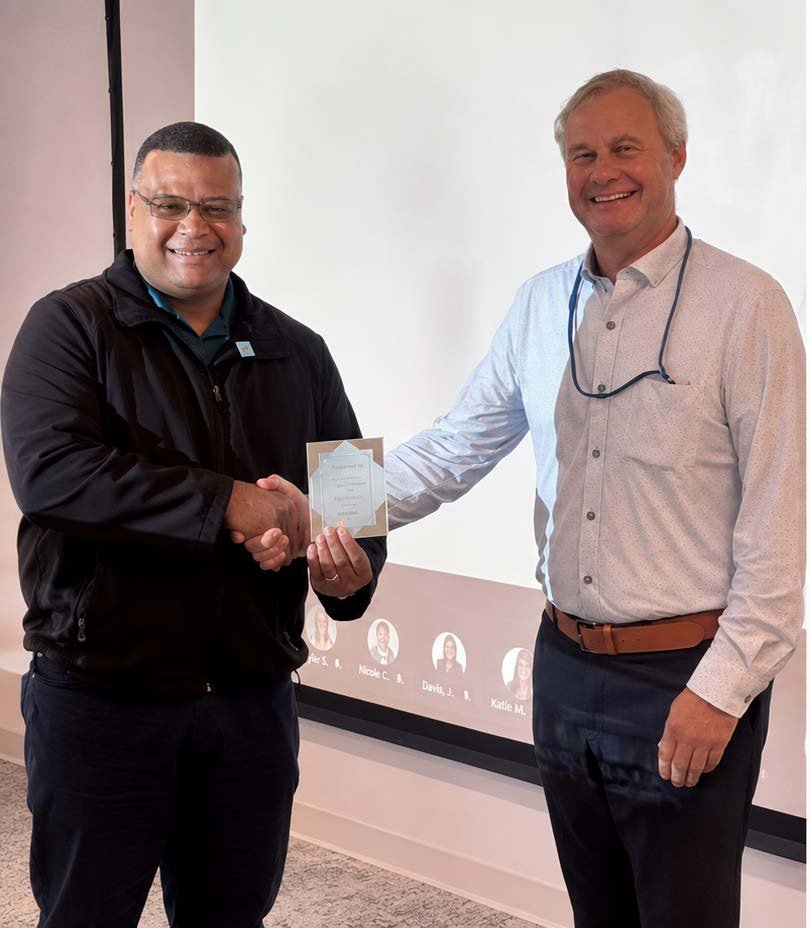
Nelson receiving the Kuraray Safety Award from KAI CEO Hans Vandommele.
Nelson participated in Global Team Training in 2015. "I came out of that training with such a positive outlook for life," he said of the foundational Kuraray training. "The trainer always told us to shoot for the moon. If you had no restrictions, what would you do to make this better? Nothing is impossible, basically." Around 2022, Kuraray selected Nelson as one of six employees globally for a three-year executive leadership program covering cultural frameworks, executive mentoring and leadership development.
The EVAL Business Unit and the barrier no one sees
About a year ago, Nelson moved from the Polyvinyl Alcohol (PVOH) Business Unit, where he had spent more than a decade, to become General Manager (GM) of Kuraray America’s EVAL Business Unit. "It’s still Kuraray, just a new business culture and goals," he said. "When I came here, I didn’t intrude into the team’s dynamics. They knew where I stood, and what I wanted to bring to this business unit." EVALTM EVOH resin is ethylene vinyl alcohol copolymer. Most people have never heard of it, but they interact with it every day.
"Think about food safety and food security," he said. " A layer of EVALTM EVOH resin provides outstanding oxygen barrier to protect the valuable ingredients of the food so your food can last longer. Milk lasts longer in the refrigerator when a layer of EVAL TM EVOH resin is in the packaging. Meat, when you see it packaged in a solid tray with a film on top, that film likely has a layer of EVAL TM EVOH resin." He went further. "A lot of people don’t know that gasoline tanks have a layer of EVAL TM EVOH resin in them. It prevents fumes from escaping. If you look at the EVAL logo, it depicts exactly what we do with two outward lines and one in the middle. It’s demonstrating the protection that EVAL TM EVOH resin provides."
EVAL has been in the market since 1972, when Kuraray established itself as the global pioneer in EVOH barrier materials. Nelson takes that seriously, but not as a reason to stand still. "If we just do what we have been doing, the business will become stagnant," he noted. "We are constantly strategizing. What is next?" Stepping into the GM role required the same approach he has always taken, just with a new team.
A decision that earned trust
When the conversation turns to defining moments, Nelson pauses. Then he tells the story of a water leak. A Union Pacific engineer called the Kuraray America Bayport plant to report water seeping near the fence line. The plant’s wastewater pipeline ran through that area. Testing showed organic compounds in the surface water. It had not rained in 100 days. The situation was uncertain and the potential consequences were serious. Nelson with the support of Kuraray America leadership team shut down the entire facility. All production brought to zero.
"The only way, because we didn’t know if it was ours or not, was to shut down completely until we found what was going on," he said. It was not a Kuraray America leak. But the outcome was almost beside the point.
People first, product second: Nelson Rodriguez-Garcia on growth and leadership at Kuraray America
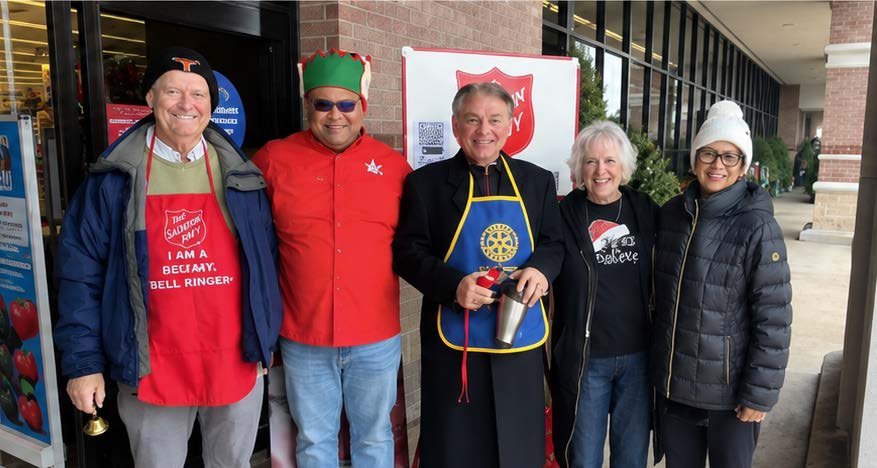
Nelson with the Rotary Club ringing the Christmas bell for The Salvation Army.
"The people in the plant appreciated our approach toward safety, both for them and the community we operate in," he recalled. "It’s easy to say safety is the most important work we do. But when it comes to the actual decision, people are watching. They’re not looking at whatever Kuraray America is doing generally. They’re looking at your decisions as you representing Kuraray America."
The feedback from his team stayed with him. "Pick your chin up," he tells them when things go wrong. "If you put your head down, you’re not looking forward and trying to fix this. We can fix it. We’re going to move forward."
Industry and leadership outlook
Nelson Rodriguez-Garcia has spent his career making things most people cannot name but cannot live without. "I tell people: look around," he said. "Nothing that you see was not made, in some way, shape or form, without our industry. The car you drive, the food you eat, the refrigerator at home. At some point, the chemical manufacturing process helped create that."
His advice to those moving into leadership is the same principle he arrived at himself the harder way. "Read about good leadership. Learn that it’s not about telling people what to do. It’s about making people comfortable around you. Treat them well. Respect their opinions. The team will follow." Nelson connects that back to the founder of Kuraray, stating "He built hospitals and did many things that are unheard of this day. Putting people at the core and in the center of it all."
The company that Nelson Rodriguez- Garcia runs a corner of today is built on those same principles. The product is invisible in daily life. The people behind it are not.
For more information, visit kuraray.com/us-en.