
Richard Jackson did not set out to become a capital projects engineering manager.
He set out to understand how things work. That curiosity has carried him through 12 years at Kuraray America, where he now leads capital projects for the company’s EVAL business, but the path there ran through steel mills, rotating equipment, overseas turnarounds and a software platform he built largely from scratch.
It is a role he has held for about a year and a half, but one that was a long time coming. Jackson spent a decade in Kuraray America’s maintenance department, moving from Maintenance Engineer I to Maintenance Engineer II to Assistant Maintenance Manager before crossing over into capital projects. That foundation, he says, shapes how he approaches everything he does now.
From Mandeville to Mississippi State to Houston
Jackson grew up in Mandeville, Louisiana, just north of New Orleans, and headed to Mississippi State University in Starkville for a mechanical engineering degree. A thermodynamics professor there pointed him toward an internship at Severstal, a steel mill near campus. He liked it enough to return the following summer, spending both stints with the maintenance group and getting a ground-level education in industrial operations that no classroom could replicate.
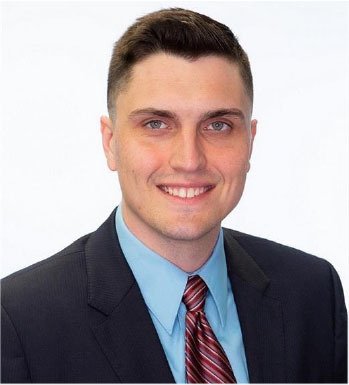
Building the future, one project at a time
Richard Jackson, Capital Projects Engineering Manager EVAL Business Unit, Kuraray
After graduating in 2011, he landed a maintenance engineering role with Albemarle Corp. in the Houston area. That’s where he met Vincent "Red" Parham, a veteran rotating equipment specialist who became his most formative professional influence. Red taught him the fundamentals of rotating equipment, machining and maintenance organization management. A short time after Jackson moved to Kuraray America, Inc., Red also joined the company, becoming maintenance manager at Kuraray America’s La Porte site. The two stayed close through Red’s retirement last year. "He for sure shaped who I am as an engineer," Jackson said.

Building the future, one project at a time
Jackson also completed an MBA through the University of Houston-Clear Lake during his first year at Kuraray, while already embedded in a new company and a demanding new role.
A product and a company with deep roots
To understand what Jackson manages, it helps to understand what EVAL™ resin is and why it matters. Ethylene vinyl alcohol copolymer resin is a high-barrier material used in food packaging, fuel systems and a range of industrial applications. Its ability to block oxygen and other gases makes it essential in packaging that extends shelf life and in fuel systems where permeation control is critical. It is a specialty product serving markets where quality and consistency are non-negotiable.
EVAL™ resin dates back to 1972, when Kuraray developed it in Japan and built a pilot plant that still runs today. In 1985, a joint venture between Kuraray Japan and Northern Petrochem established the first EVAL manufacturing facility in North America, on the same Houston-area site where Jackson works. That site has expanded repeatedly: a capacity doubling in 1996, a new production line in 2005 and another capacity doubling in 2012. The EVAL Europe facility in Antwerp, Belgium, launched in 1999 and doubled its own capacity in 2007.
Now the business unit is in the middle of its most significant expansion yet. A new facility in Singapore is currently under construction. Jackson served as a technical advisor on rotating and mechanical equipment during early engineering, including the 60% model review, and describes it as the largest project in the business unit’s history. The scope of that investment reflects just how fast global demand for EVAL™ resin is growing.
Project management and the technology challenge
Capital projects in the chemical industry have always been high-stakes. Rising labor rates, higher material costs and increasingly complex supply chains have made them more so. Jackson is direct about what the job demands most.
"Project management is number one," he said. "Anything you can do to stay on schedule, stay on budget, have little to no scope creep, those are the skills a project manager needs."
Right behind it is communication, which he says does not always come naturally to engineers. He took a Dale Carnegie course early in his Kuraray America career and credits it with building skills he wishes he had prioritized sooner. He was not talking about presentation polish. He meant the daily discipline of keeping contractors, vendors, engineers and coworkers aligned around what needs to happen and when. "Even today I would say I’m not proficient, but I have definitely gotten better than where I was a decade ago," he said.
The broader challenge he watches across the industry is technology adoption. During his turnaround management years, he traveled to Kuraray’s Belgium facility and encountered an internally developed Shutdown, Transition, Outage software platform. He brought it back to the U.S. and expanded it into what became known as the STOP App, a turnaround management tool designed to standardize processes and move critical data out of spreadsheets and email chains. The experience pulled him into the digital space and showed him how wide the gap is between what technology can do and what most industrial facilities are actually doing.
In his current role, he is developing a digital twin for the Houston facility built around turnaround planning, lockout/tagout procedures and project management, with functionality he says he hasn’t found replicated elsewhere in the industry. "I really enjoy the process of building these solutions, seeing them work, using them as an end user," he said. He is also candid about the risk of moving too fast: implement something today and it may be outdated next year. The real challenge is not just adoption. It’s adopting at a pace the organization can sustain.
Safety is the cornerstone of everything we do
Safety at Kuraray America isn’t just a department. It’s the foundation the entire operation is built on. Jackson credits much of the facility’s culture to the on-site safety professional whose involvement with local and national safety organizations has shaped the program over many years. When Jackson was running turnarounds, safety was the one function he never had to worry about. "Safety was always on lockdown," he said. That kind of record is built over time with consistent leadership and an organization that treats safety as a core value.
Community and giving back
Kuraray America engages the broader community through the Kuraray Foundation of America (KFA)1, which supports local nonprofits, and through participation in events like the Galveston Bay Foundation activities: Bike Around the Bay and the Trash Bash coastal cleanup.
The Kuraray America EVAL site also runs a water bottle recycling program with Coastal Ice & Water that achieved a 24% recycling rate during a recent pilot — more than three times the 7% U.S. national average — and generated over $6,000 in recycled material value to fund local scholarships.
Outside of work, Jackson volunteers as a firefighter for the city of League City, where he lives. It is, he says, where most of his community service goes, and it is a commitment that predates his current role.
The lesson he carries forward
The feedback that has stayed with Jackson longest came from Scott Hardegree, a former manager who later became EVAL plant manager. Hardegree put Jackson through 360-degree reviews and management assessments years before Jackson had thought of himself as leadership material.
"He saw something in me and I’m really glad he did," Jackson said. "His guidance was very critical to who I am today."
After 12 years, two degrees, a decade in maintenance, five years running turnarounds, a software platform, a digital twin in development and a Singapore expansion taking shape on the other side of the world, Jackson is still, at his core, the engineer who wanted to understand how things work. He’s just doing it at a considerably larger scale now.
1KFA refers to the Kuraray Foundation of America, a 501(c)(3) nonprofit organization focused on charitable giving and community support.