
Julie Matuszczak’s approach to safety training became personal early on in life.
Growing up with a father who worked at Shell Oil for over 40 years, she heard the stories about near-misses and incidents that didn’t make the news but easily could have ended differently.
"When I was younger, I didn’t realize the inherent dangers of his job," Matuszczak said. "But after growing up and looking back at some of those stories, it reminded me that what I do makes a difference, not only in those workers’ lives, but in the lives of everyone in the community and their families."
That realization shapes how Matuszczak approaches her role managing NAM HSE Training Compliance at Air Liquide, where she develops safety training programs for 70 largescale production and electronics sites across North America, reaching nearly 600 employees. Her work covers everything from lockout/tagout procedures to confined space entry, permit writing to process safety management.
From literature major to learning strategist
Training the next generation: How Air Liquide builds safety culture one program at a time
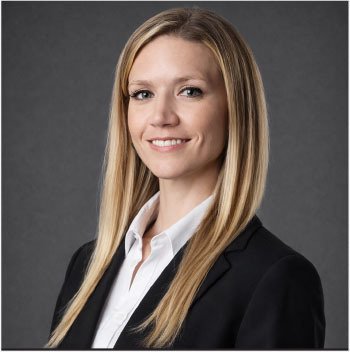
Julie Matuszczak, NAM HSE Training Compliance, Air Liquide
Matuszczak didn’t start her career planning to build training programs for industrial operations. She graduated with a literature degree but wasn’t interested in teaching. A position in the eLearning department at the Houston Area Safety Council changed everything.
"I fell in love with the mission of serving adult learners in such a high-risk business," she said. "The challenge was, how do we take this dense, compliance-based content and deliver it in a way that really matters and makes a difference in these folks’ lives?"
Her father’s decades in the industry gave her insight into field worker pain points that most training developers never see. What started as creating content at a program level evolved into thinking about how to build learning cultures within entire organizations.
"Now it’s about analyzing data to show meaningful impact and ROI of training, while continuing to utilize new technologies and deliverables for the most relevant content for our learners," Matuszczak said.
When training becomes life-saving
A typical day for Matuszczak starts with reviewing metrics, meeting with subject matter experts and stakeholders and collaborating across teams to maintain alignment. She blocks time each week for professional development to stay current with learning trends for adult learners.
But the weight of the work is never far from her mind.
"When you begin developing compliance training with that in mind, it shifts from a standard learning experience to a high-risk, life-saving service," Matuszczak said. "If an accident or incident occurs with my learners, the onus is on me and how my training could have been more effective. What we do matters to the users, families and communities, not to mention the environmental impact of our business for all future generations."
One focus area right now is building a safety leadership culture within Air Liquide facilities through creative learning solutions. The company is transitioning from an old-school compliance mindset to a modern human performance-driven culture.
"We no longer ask, did the person complete the training?" Matuszczak said. "We now ask, how did this training change the behavior, and how is it protecting our system from human error?"
Fighting for what works
If budgets were cut, Matuszczak knows exactly what she’d fight to keep: realistic, scenario-based training for critical risks like lockout/tagout, confined space and permit writing.
"True safety culture requires effective behavior and decision-making, not just rule memorization," she said. "Our instructor-led, scenario-based training compels employees to apply knowledge in a realistic, safe environment, building essential muscle memory for compliance and critical intervention."
The program costs more than eLearning alternatives, but Matuszczak considers it the most effective risk mitigation tool in her arsenal.
"Cutting it is a dangerous shift in our risk profile," she said. "A single high-consequence incident would cost exponentially more than the entire training budget. This is a vital investment in risk management."
Proving training ROI
Matuszczak’s approach to demonstrating return on investment is straightforward: measure the reduction in highest risks.
"The true ROI is the increase in production uptime and the demonstrated reduction in high-severity procedural deviations observed in the field," she said.
Pinpointing an exact prevented incident from training is difficult, but Matuszczak points to improved lost time injury rates in direct correlation with newly revised training programs as the ultimate goal.
"With metrics, you’re able to look at the data and shift the learning objectives as needed," she said. "Speaking directly to your learners is also a great way to understand and develop training that is meaningful and relevant."
Technology meets human performance
As automation, digital twins and AI enter industrial operations, Matuszczak is preparing people for jobs that didn’t exist five years ago while maintaining skills for systems that have been running for decades.
"Our approach is teaching the collaboration between the two worlds," she said. "We foster cross-training, where digital twins and technicians work together to build a shared language of risk."
All training at Air Liquide is developed with the company’s Life Saving Rules as the foundation, with a human in the loop to ensure technology supports systems and core values rather than distracting from them.
Matuszczak believes simulator and handson training work best in a blended learning environment. "The sweet spot is theory training in a computer-based format, then simulated training in a controlled environment with low risk and stress, which leads to supervised on-the-job training for validation," she said. "This allows folks to be decision-makers that possess both the cognitive ability to manage a crisis and the physical proficiency to execute the safe response."
Capturing knowledge before it retires
With the industrial sector facing a workforce cliff as experienced workers retire, Matuszczak is using AI as a knowledge continuity platform.
"We proactively capture institutional knowledge, the critical context and experience that exists outside of written manuals, before it retires," she said. "This is done through structured videos, personalized interviews and personal documentation."
The collected knowledge is tagged, indexed and made searchable through AI integration, allowing future employees to access it for learning. "This transforms retiring employees’ experiences into a living, accessible and searchable knowledge base for the next generation of operators and technicians," Matuszczak said.
When hiring for her team, Matuszczak distinguishes between trainers and instructional designers. For instructional designers, she wants foundational knowledge in adult learning and instructional design methodology with the technical skills necessary for development. For trainers, she needs people who have been in the field with direct experience.
"They are the subject matter experts presenting the information to the learners," she said. "They also need to have skills in presenting the content in a meaningful way through certified trainer techniques."
The personal side
Matuszczak’s approach to work has been shaped by multiple mentors who taught her lessons about sustainable performance and ethical leadership. Setting firm boundaries isn’t just about work-life balance but cognitive resilience. Asking for and accepting help builds organizational reliability and combats imposter syndrome. Authentic leadership and connectivity build trust and a challenge culture in safety.
"Consistent presence is the ultimate measure of commitment," she said. "You are capable of great things, but opportunity and impact only begin when you are reliably present to execute your capabilities."
Her biggest regret? "All the hours spent doubting myself and my capabilities," Matuszczak said. "Overcoming the dreaded imposter syndrome and truly knowing that I belong in the room and am worthy of speaking my truth is a continuous learning process. That realization is what allows me to lead authentically and advocate fiercely for our safety training initiatives."
What gets her excited about coming to work is helping others and creating meaningful experiences.
"I get to do that every day with folks that want to be safe and want to go home to their families," Matuszczak said. "Being raised in that same environment myself, I understand that our learners care about their work and want to do the best they possibly can with every task, and I get to help support that drive."
For more information, airliquide.com.