
Billions of dollars continue to flow into Gulf Coast industrial projects, driven by petrochemical expansion, energy infrastructure and manufacturing growth.
But as investment accelerates, bringing projects from concept to completion has become increasingly complex.
Beyond engineering and construction, owners must navigate permitting, infrastructure, workforce shortages and coordination across multiple agencies; challenges that can significantly impact schedules and costs.
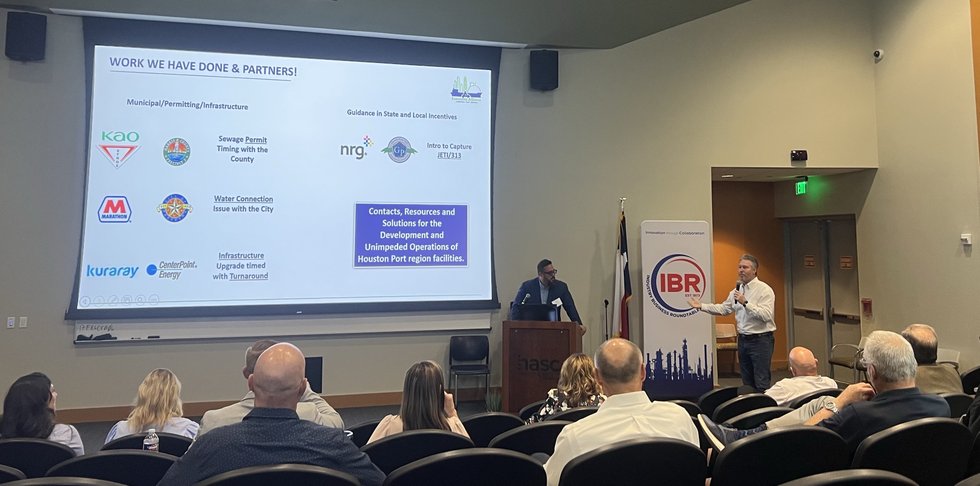
Those issues took center stage at a recent ECHMA Member Breakfast, where Economic Alliance Houston Port Region President and CEO Chad Burke and Vice President of Economic Development Chad Carson discussed the behind-the-scenes efforts that help keep industrial projects moving.
Economic development beyond recruitment
Burke said the Economic Alliance’s mission goes well beyond recruiting companies to the region. "The mission of the Economic Alliance is really straightforward. It’s to grow the regional economy," Burke said. "When you expand a facility, when you build a new facility, build a warehouse, a terminal or a dock, that capital investment goes onto the tax rolls … and really supports the ecosystem."
He noted that manufacturing creates one of the strongest economic ripple effects of any industry, with petrochemical manufacturing generating an estimated eight indirect jobs for every direct position inside a facility.
Relationships can keep projects moving
One of the biggest themes throughout the presentation was that project challenges are often solved through communication rather than regulation.
Companies regularly encounter issues involving permits, utilities, infrastructure improvements or municipal approvals, particularly when projects involve multiple jurisdictions.
Burke said organizations like the Economic Alliance help bridge those conversations by connecting owners with the appropriate agencies before delays become costly.
Navigating the next wave of Gulf Coast industrial growth
"It’s always just a matter of communication," Burke said. "We can be that facilitator to the right person to get that communication started again."
He described one project valued at more than $100 million that had already stopped construction while waiting on a permit. A single phone call, he explained, can often reconnect the right stakeholders and restart progress.
The value of established partnerships
Carson emphasized that many companies, especially those new to the Houston Ship Channel region, don’t necessarily know who to contact when challenges arise.
Instead of navigating unfamiliar government agencies or utilities on their own, companies benefit from established relationships that already exist across the region.
"There’s not a front door," Carson said while describing the challenge of working through large utility organizations. "We really try to work those angles with our contacts … folks pick up the phone for them."
Those relationships have helped resolve issues ranging from environmental permitting to utility coordination and infrastructure access.
As the Gulf Coast enters its next wave of industrial growth, project success will depend on more than engineering. Strong partnerships, effective communication and coordinated planning are becoming just as critical as the investments themselves.