
According to Helen Currie, chief economist with ConocoPhillips, in early 2023 some pundits and industry leaders were warning of a recession or, at the least, "a large global slow-down" that created "a lot of negativity in the oil markets and other commodity markets."
"In my opinion, we did not have that. The U.S. is looking like it clearly avoided recession," Currie said. "There are policies in place that helped the U.S. economy to slow down without having a full-blown recession. Oil demand has stayed very strong with the U.S. and in other countries and emerging markets."
Discussing how abundance and scarcity impact this year’s and next year’s oil markets at CERAWeek by S&P Global in Houston, Currie said she believes "the whole narrative around the global economic outlook is more positive and much more constructive."
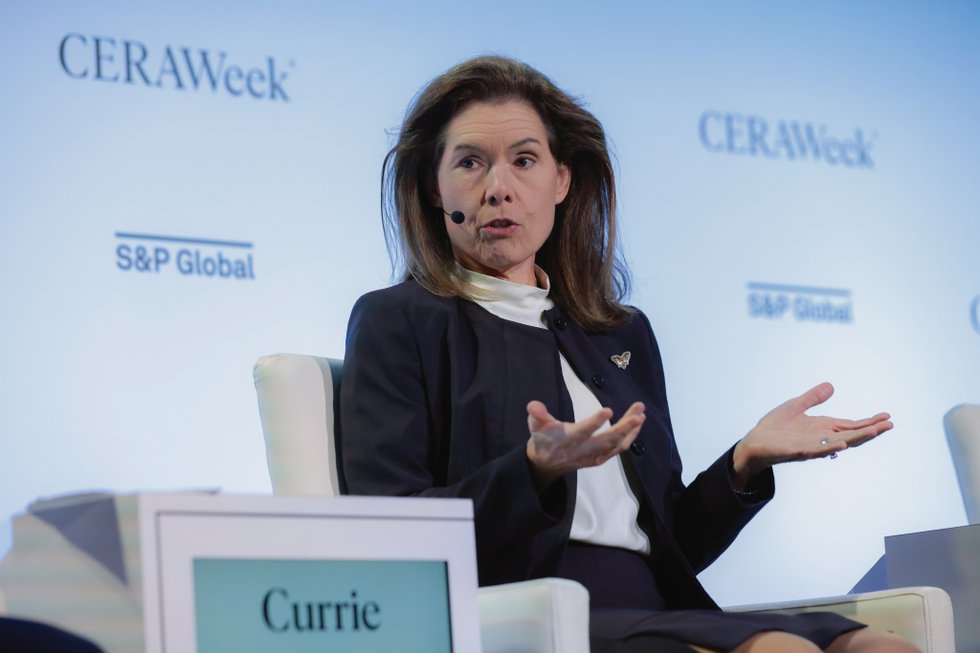
ConocoPhillips, PETRONAS: Projections remain positive for oil markets
Helen Currie, chief economist with ConocoPhillips. Photos courtesy of CERAWeek by S&P Global.
"We saw oil demand set another record high last year amidst all this negativity. And we’re looking for another record-high world demand this year across the board. So all indicators there are quite positive," she said.
Joining Currie on the panel, Mazuin Ismail, senior VP of downstream business with PETRONAS, said that many leaders in the O&G industry recognize that "our sole purpose is to ensure that energy is delivered so that the world can progress and prosper."
"That is why we wake up every day," Ismail continued. "We want to provide that for the world. That is our purpose."
Ismail described that goal as "very intricate and very complex, from exploration to development and how we deliver our goods — oil — to the rest of the world."
Emphasizing that "diversity and adaptability" are key to industry stability, Ismail reminded conference delegates of two recent geopolitical events that can threaten industry stability.
"With Russia and Ukraine, we saw gas prices spike up. And we see that the supply of energy is disrupted. We’ve seen how people scramble to get fuel because it is not available," Ismail said. "Quickly governments and countries realize that diversity of fuel is necessary, and diversity in the source of where that fuel comes from is also necessary, and that really changes the fundamentals of the market."
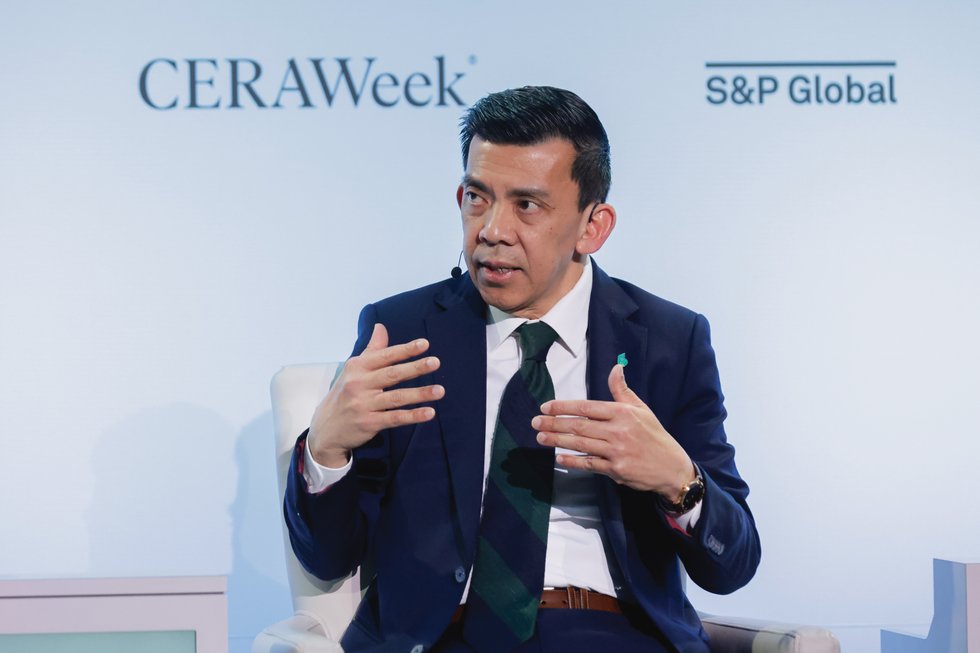
ConocoPhillips, PETRONAS: Projections remain positive for oil markets
Mazuin Ismail, senior VP of downstream business with PETRONAS
Some see that change for good, Ismail said.
"We as industry players should not sit in the back seat. We need to be very active in how we stabilize the situation by providing a source of energy for the world," he said.
Development, Currie said, will continue to be an industry priority.
"A lot of development will continue to be led in the Permian Basin, but there’s still a lot of other activity going on in the major plays in the Gulf of Mexico and so forth," she said. "The U.S. will continue to be a very large provider of crude to the world for a long time."
Ismail said he agrees with Currie that "it’s clear" that there is plenty of supply to last for decades.
"Oil will play a critical role moving forward, depending on who you’re talking to. If we listen to others, some say that it is likely that oil is going to peak in five or six years," Ismail said, projecting medium-to-long term.
"There’s a lot of uncertainty around what Russia is going to look like in the year 2030 — we can hardly agree on or know what it’s going to look like by the end of this year," she said. "But that being said, there’s still a large need for supplies from many countries around the world. We think that the resources are there, and that the industry has executed and developed the technology to capture those resources accordingly."