
Industrial construction is entering a new phase as demand for power generation, advanced manufacturing and data center infrastructure reshapes where contractors invest and how projects are delivered.
Success increasingly depends on the ability to combine skilled craft labor with controlled fabrication, rigorous quality standards and scalable project execution. In response, more contractors are expanding beyond traditional field construction by investing in permanent regional infrastructure that supports both local economies and projects nationwide.
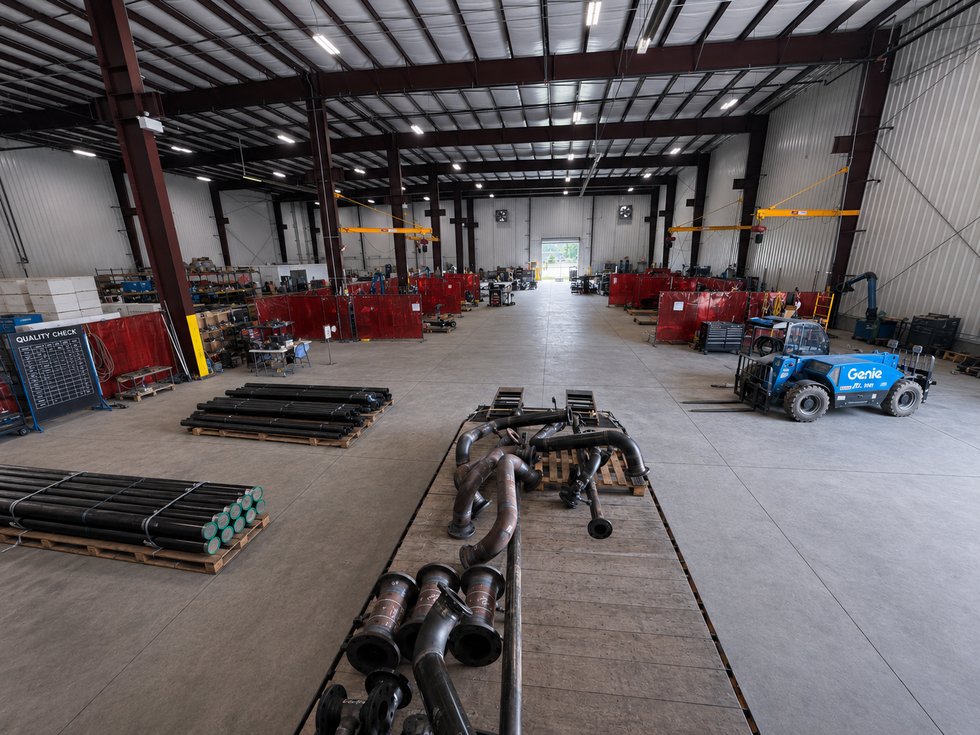
Global Specialty Construction Services (GSCS) marked the opening of its new office and pipe fabrication shop in South Point in July 2026, establishing a home base for estimating and construction management while adding another production asset to the company’s national platform. The move is designed to serve two purposes at once: continue the support and growth of the KYOVA region’s highly skilled labor force and use that capacity to support major projects across the country.
GSCS built its reputation performing work in refining, petrochemical and other heavy industrial environments, where crews operate around critical process systems, compressed schedules and unforgiving conditions. The company is now carrying that experience into two of the fastest-growing construction markets in the country: power generation and advanced technology, including data centers, semiconductor facilities and large-scale manufacturing.
The shift is a natural one. O&G work demands disciplined planning, qualified craft labor, material control, weld quality, inspection coordination, testing and complete turnover documentation. Those same controls are essential when building mission-critical cooling, hydronic, process and utility systems for advanced technology campuses, or balance-of-plant systems for power facilities. In each of these markets, owners have little tolerance for rework, startup delays or inconsistent documentation and GSCS is well suited to tackle these demands.
Safety transfers just as directly as technical discipline does. GSCS reported a 0.14 total recordable incident rate and 2.7 million work hours in 2025, a record the company attributes to a culture developed on some of the industry’s most complex industrial sites. That same approach is now being applied in markets where multiple trades must be coordinated without compromising production or schedule.
Building off-site capability
South Point strengthens GSCS’s operating model through off-site fabrication. The new shop is capable of producing piping, skids, modules and structural components in a controlled setting, supported by a climate-controlled paint booth and a custom insulation pad shop. Pre-fabrication improves repeatability, creates clearer inspection points and allows shop work to proceed in parallel with field construction, reducing congestion and labor exposure at the jobsite.
The facility is United Association (UA) stickered, connecting its fabrication capability to the UA framework and to GSCS’s relationships with more than 150 unions nationwide. That combination pairs union-fabricated assemblies with local union field execution across regions. GSCS already operates on a coast-to-coast footprint, and South Point is positioned to support work tied to markets as far-flung as Boise, Idaho and Los Angeles, while maintaining consistent expectations for labor, safety, quality and productivity regardless of location.
A regional anchor with national reach
Regionally, GSCS intends to make South Point a dependable fabrication and project-support center for owners, EPC firms and mechanical contractors throughout Ohio, Kentucky and West Virginia. The office will house estimating and construction management functions, giving the company a permanent presence from which to bid, plan and manage work throughout the Tri-State region.
Nationally, the shop gives GSCS a scalable base from which to grow its piping and mechanical services alongside its established scaffold, insulation, coatings, fireproofing, refractory, abatement and site-service capabilities. Rather than standing alone, South Point is designed to function as one link in a larger network, feeding fabricated assemblies to projects well beyond Ohio’s borders while reinforcing the company’s core industrial disciplines.
Company leaders say the timing reflects where the construction industry is heading. Power generation and advanced technology projects have driven a surge of capital investment in recent years, and both sectors depend on the same rigor GSCS has long applied in refining and petrochemical work: careful sequencing, qualified craft labor and documentation that satisfies owners and inspectors alike. By opening a fabrication shop rather than relying solely on field-built work, GSCS is betting that controlled, repeatable production will become a bigger part of how these projects get built.
The company also sees South Point as a statement about where it plans to grow next. Rather than treating power and advanced technology work as a side venture, GSCS is building dedicated infrastructure, in the form of a fully equipped shop, staffed office and unionized workforce, to support it as a longterm line of business.
Investing in the workforce
The South Point opening also reflects GSCS’s continued investment in skilled craft labor. Because the shop operates under a UA sticker, work performed there is tied directly to union apprenticeship and training standards, giving local tradespeople access to structured career paths in pipe fabrication, welding and related crafts. Company leaders say pairing union training pipelines with steady fabrication work is central to keeping quality consistent as the company scales into new markets.
For the Ohio River Tri-State region, the facility represents more than a single project. Fabrication shops of this kind tend to generate steady, long-term work rather than the short-term surge typical of a single construction job, since the shop can serve multiple projects simultaneously across different clients and geographies. That gives GSCS’s South Point office a role as both a local employer and a regional supplier of fabricated components to industrial and technology projects well beyond the immediate area.
Executives noted that South Point is not intended to be the company’s last such investment. As power and advanced technology work continues to grow as a share of GSCS’s overall project mix, company leadership indicated that additional fabrication and support facilities could follow in other regions where similar demand exists.
Company leadership was careful to frame the South Point opening not as a departure from GSCS’s oil and gas roots, but as an expansion of them. The same industrial discipline that has defined the company’s refining and petrochemical work is now being applied to the infrastructure powering the next generation of American manufacturing and digital growth.
GSCS said it expects the South Point office and shop to be fully integrated into ongoing project work in the coming months, with fabrication capacity ramping up to support both regional clients and the company’s national project slate.
For more information, visit gscsservices.com.