
"There is a shared belief throughout the organization that everything matters — every detail, every decision and every interaction," said Senior Vice President Cody Puma with Specialty Welding and Turnarounds (SWAT).
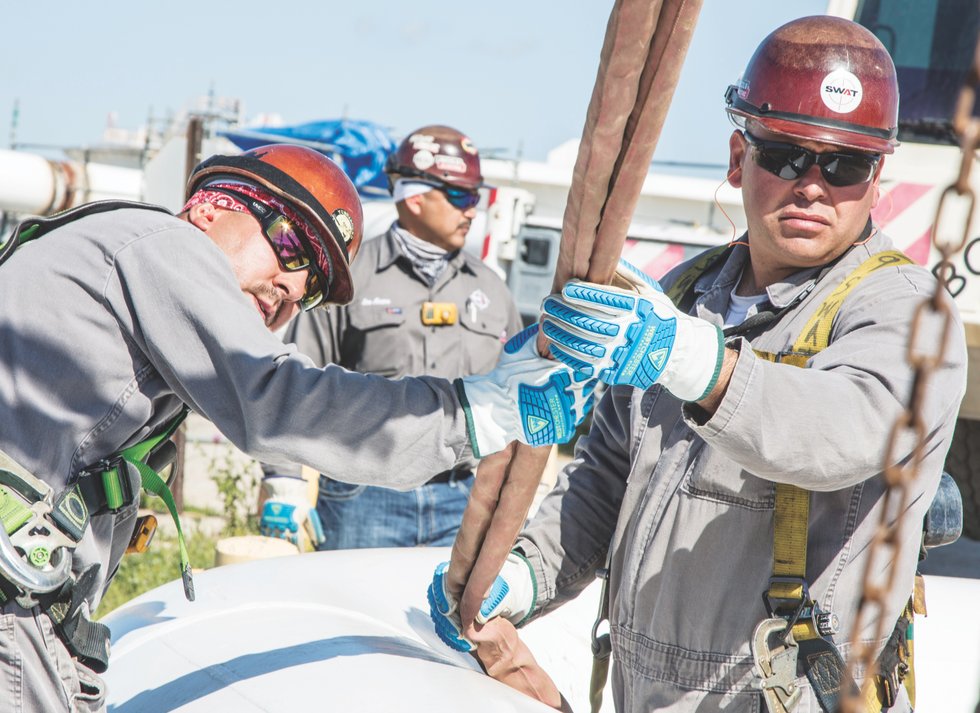
SWAT: Built through accountability, proven through performance
"In turnaround work, strong reputations aren’t build in the moment — they’re built over time. At SWAT, that reputation comes from thousands of decisions made in the field every day."
It’s built through preparation, accountability and a commitment to safety and quality that doesn’t change when pressure increases. According to company leadership, those principles have shaped SWAT’s approach from the beginning and continue to drive the company’s success today.
Today, SWAT supports customers through specialty welding, general mechanical services, catalyst handling, decontamination, cooling tower services, torque and tensioning, alky services and a range of specialty maintenance solutions across the refining and petrochemical industries. While its capabilities have expanded significantly over the years, leadership says the approach has remained the same: focus on execution, invest in people and never compromise on safety or quality.
For SWAT, everything starts with safety.
The company has built an industry-leading safety record over the years, earning recognition from organizations including the Greater Baton Rouge Industry Alliance, the Golden Triangle Business Roundtable, the Industrial Safety Training Council, the Health and Safety Council and the Safety Council of Southwest Louisiana. Leadership is quick to point out, however, that those recognitions are not the goal. They are the result of a culture that treats safety as a responsibility shared by everyone in the organization.
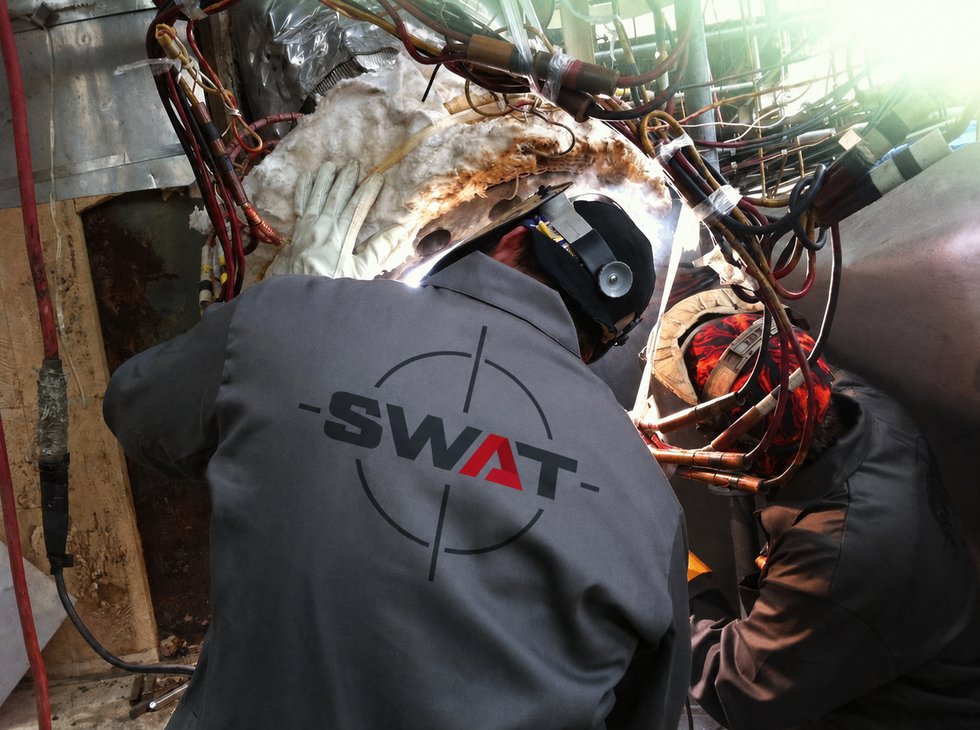
SWAT: Built through accountability, proven through performance
"Our company culture is deeply rooted in the pursuit of excellence," said Puma. "We’re constantly challenged to adapt to various situations, often unfavorable, yet we consistently demonstrate resilience, ensuring the safety of our workforce, maintaining the quality of our work and meeting the schedules set by our customers without wavering."
The strongest safety cultures are built long before crews arrive on a jobsite. They are reflected in planning meetings, hiring decisions, training programs and the expectations leaders establish every day.
A well-planned job tends to be a safer job. A crew that communicates effectively is less likely to make costly mistakes, and a team that takes ownership of its work is more likely to identify hazards before they become incidents.
For Puma, those connections are impossible to separate.
"There is a shared belief throughout the organization that everything matters," he said. "Every detail, every decision and every interaction."
That philosophy extends from the executive team to the field. "SWAT stands out because the company truly values both safety and the employees behind the work," said Site Manager Keith Flowers. "The expectations are high, but so is the support, training and teamwork. Everyone is held accountable, and that creates a strong culture in the field."
Flowers believes one of the company’s greatest strengths is its ability to maintain high standards even under difficult conditions.
"I believe what sets our team apart is our work ethic, safety mindset and ability to adapt under pressure," he said. "We take pride in doing quality work while maintaining high safety standards, even during difficult jobs and tight timelines." Corporate Safety Director Kendell Duvall believes that commitment starts with leadership.
"SWAT leadership delivers on their commitments," Duvall said. "They understand this is a people-driven industry, and they place value where it truly belongs — on the people doing the work."
Since joining the company, Duvall says one of the things that has impressed him most is the consistency he sees across jobsites.
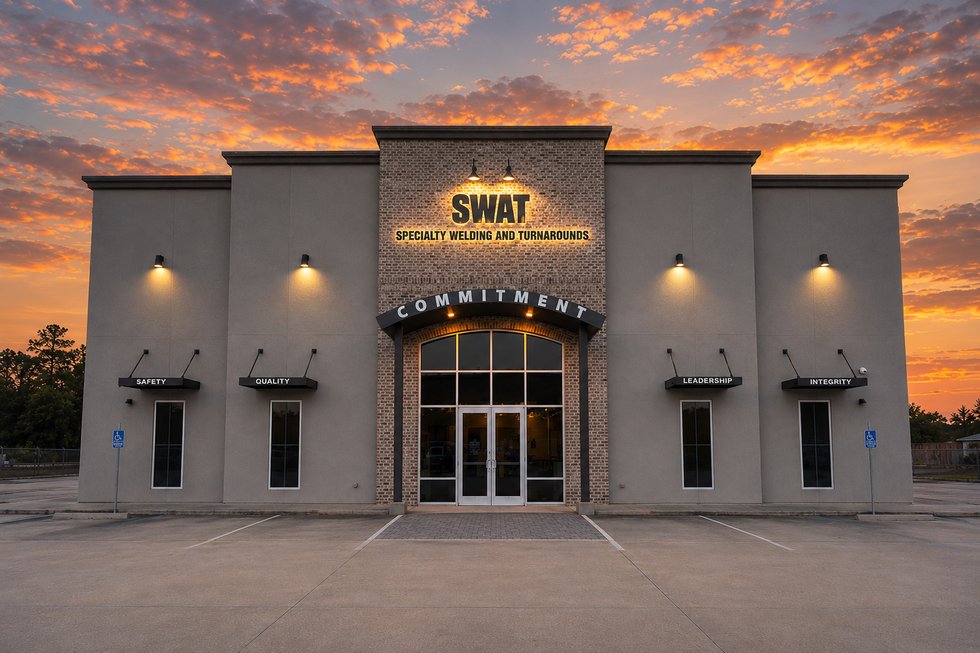
SWAT: Built through accountability, proven through performance
"Every site I’ve visited, you can see it — there’s a consistent standard of work ethic from the field to leadership," he said. "People here take pride in what they do, and they’re committed to executing the work safely and the right way every time." "Results matter, and SWAT has clearly built a track record of delivering when it counts most," said Chief Financial Officer Jessica Delaune. "SWAT knows its niche in turnaround execution and doesn’t try to be everything to everyone."
While safety culture can be difficult to quantify, SWAT’s safety record has become one of the company’s strongest differentiators. Leadership points to years of strong safety performance as evidence that the company’s approach is working, but internally those results are viewed as the outcome of thousands of daily decisions rather than a single initiative.
Safety alone, however, does not explain SWAT’s success.
Throughout conversations with leadership and employees, one word surfaced repeatedly: accountability.
Not accountability as a slogan, but accountability as a system.
"The culture at SWAT is grounded in safety, accountability and pride in execution," Delaune said. "There’s a strong sense of earned trust. Whether you’re in the field or in the office, your performance directly contributes to the overall outcome."
That accountability exists throughout the organization. Employees receive direct feedback following projects.
Performance is measured. Expectations are clearly communicated. The goal isn’t simply to complete jobs. It’s to improve after every one.
"One example of that accountability is our commitment to timely, direct feedback, including rating employees at the conclusion of each job," Delaune said. "That ensures expectations are clear and performance is continuously improved."
Project Manager Jeremy Williams believes that process has helped shape the company’s culture.
"What truly sets SWAT apart is the level of accountability throughout the company," Williams said. "Everyone is held to a high standard, and every employee is evaluated on their performance after each job they work."
According to Williams, that environment encourages continuous growth.
"It creates an environment where employees are motivated to perform at their best and where strong work ethic and professionalism are recognized."
Delaune believes those systems ultimately create better outcomes for customers.

SWAT: Built through accountability, proven through performance
"When you see a team execute safely, on time and within expectations, it reinforces that success is built on systems, people and preparation, not luck."
While systems and processes play an important role, nearly every conversation eventually returned to the same topic: people.
Ask almost anyone inside the company what separates SWAT from its competitors and the answer comes quickly. It’s not a piece of equipment, a process or a service line. According to Director of Business Development Chris Husser, it starts with the people behind the work.
"As cliché as it may sound, SWAT is about the people," Husser said.
That philosophy is evident throughout the organization. Whether discussing safety, quality, customer relationships or operational performance, employees consistently point to the company’s people-first culture as one of its greatest strengths.
"Our supervision, along with very low turnover on craft-level personnel, allows SWAT to continue being successful on every project," Husser said. "Our executive team supports the field in every way possible because they know our quality and culture are what set us apart from our competition."
Husser spent more than a decade in the turnaround industry before joining SWAT and said the company’s reputation for excellence was already well established.
"When I got the opportunity to join the company, it was a no-brainer," he said. "Everything since joining the team nearly six years ago has been nothing short of amazing."
Today, he believes the same qualities that attracted him to SWAT continue to drive the company’s success.
"People. People. People. That’s what makes the difference."
Williams shares a similar perspective.
"I chose to work for SWAT because I wanted to be part of a new company and grow with it from the beginning," he said.
"What keeps me here is the management and the way they treat their people."
One of the most challenging projects of Williams’ career involved managing a turnaround with more than 500 employees across multiple scopes and work groups. Coordinating manpower, schedules, safety requirements and communication at that scale required constant planning and execution.
"Managing a project of that size required strong communication, coordination and a constant focus on safety and efficiency," Williams said.
What stood out wasn’t the size of the project. It was the support.
"Management was very involved. They came out to the job site, participated in safety meetings and stayed engaged with the crews. That level of involvement showed that the company genuinely cares about both the employees and the success of the work being done."
Flowers sees that same culture in the field.
"The culture is hardworking, supportive and team-oriented," he said. "People here look out for one another, especially in demanding environments. Everyone is expected to pull their weight, but there’s also a strong sense of respect and camaraderie across the crews."
For Vice President of Specialty Services Preston Radley, that culture has existed since the beginning.
"I was one of the seven people who started with this company in the very beginning," Radley said. "With the people that came from the same previous company, it was the easiest decision I have ever made."
More than a decade later, he believes the formula remains remarkably simple.
"SWAT puts the people that do the work as the top priority and makes sure they have the tools and resources to do the job safely and efficiently."
That people-first approach has also helped establish one of the company’s strongest competitive advantages: quality.
In turnaround work, quality often comes down to details most people never see. A single weld can impact schedules, startup timelines and overall project performance. One quality issue can create costly rework, delay critical operations and increase risk throughout a project.
That’s why SWAT places such a strong emphasis on weld quality and weld performance.
Leadership points to those results as evidence of the planning, craftsmanship and field execution that customers have come to expect from the SWAT name.
In an environment where downtime can cost millions of dollars, execution matters. For Puma, that consistency is what ultimately drives customer confidence.
"People recognize the SWAT name because they associate it with highly skilled craftsmen, strong leadership and a team that consistently delivers for its customers," he said.
Over time, those experiences become trust, and trust becomes the foundation for long-term partnerships.
Few stories illustrate that better than one Husser still remembers clearly.
One of SWAT’s customers experienced a significant fire at its facility. Husser called to check on the wellbeing of the site’s personnel. Everyone was safe.
Then the turnaround manager said something he won’t forget.
"As I was getting ready to end the call, he said, ‘Keep your phone near you because we only trust one company to make these repairs.’"
For Husser, that moment represented years of work.
"That one simple statement made me so proud of this company and the reputation we have built over the last several years." Duvall sees that reputation as something every employee carries with them.
"When I walk onto a jobsite wearing the SWAT logo, I’m reminded that I’m representing something that’s been built over time — through effort, sacrifice and trust," he said. "There’s a responsibility that comes with that, and I take it seriously."
As the company looks ahead, leadership remains optimistic about both the market and SWAT’s position within it.
Delaune believes SWAT is positioned well for what comes next.
"This is a team that is constantly pushing to improve, whether that’s operational performance, safety outcomes or financial discipline," she said.
Radley sees the future through a similar lens.
"Our reputation in this business is toptier," he said. "People want to join a team that cares and knows how to execute turnarounds at the highest level. They want to be part of that success."
Leadership expects the next two years to remain particularly active as customers continue investing in maintenance, reliability and operational performance initiatives. For SWAT, the strategy moving forward is straightforward: continue investing in people, continue executing safely and continue delivering the quality customers have come to expect.
In an industry where trust is earned one project at a time, leadership believes the future will be built the same way the last decade was built: through accountability, safety, quality and execution.
And when customers need certainty, those are the things that continue to matter most.
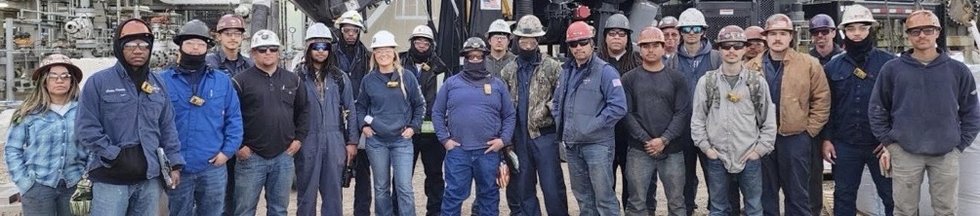
SWAT: Built through accountability, proven through performance
"Results matter, and SWAT has clearly built a track record of delivering when it counts most.SWAT knows its niche in turnaround execution and doesn't try to be everything to everyone. Jessica Delaune Chief Financial Officer
"People. People. People.That's what makes the difference. Chris Husser Director of Business Development
"People here look out for one another, especially in demanding environments. Everyone is expected to pull their weight, but there's also a strong sense of respect and camaraderie across the crews. Keith Flowers Site Manager
"People here take pride in what they do, and they're committed to executing the work safely and the right way every time. Kendell Duvall Corporate Safety Director
"I chose to work for SWAT because I wanted to be part of a new company and grow with it from the beginning. What keeps me here is the management and the way they treat their people. Jeremy Williams Project Manager
"People recognize the SWAT name because they associate it with highly skilled craftsmen, strong leadership and a team that consistently delivers for its customers. Cody Puma Senior Vice President
"Our reputation in this business is top-tier. People want to join a team that cares and knows how to execute turnarounds at the highest level. They want to be part of that success. Preston Radley VP of Specialty Services