
NOTE: The sponsor of this content may contact you with more information on this topic. Click here to opt out from sharing your email address with this sponsor. (This link will not unsubscribe you from any other BIC email list).
Heat exchangers are critical assets in refineries, chemical plants and power generation facilities.
When a tube leaks, operators must act quickly to isolate it and return the unit to service. For decades, welded tapered plugs were the standard solution. Today, many facilities are replacing them with mechanical-style tube plugs for a simpler, faster and more controlled approach.
The shift is driven by safety, turnaround efficiency and long-term equipment integrity.
The drawbacks of welded tapered plugs
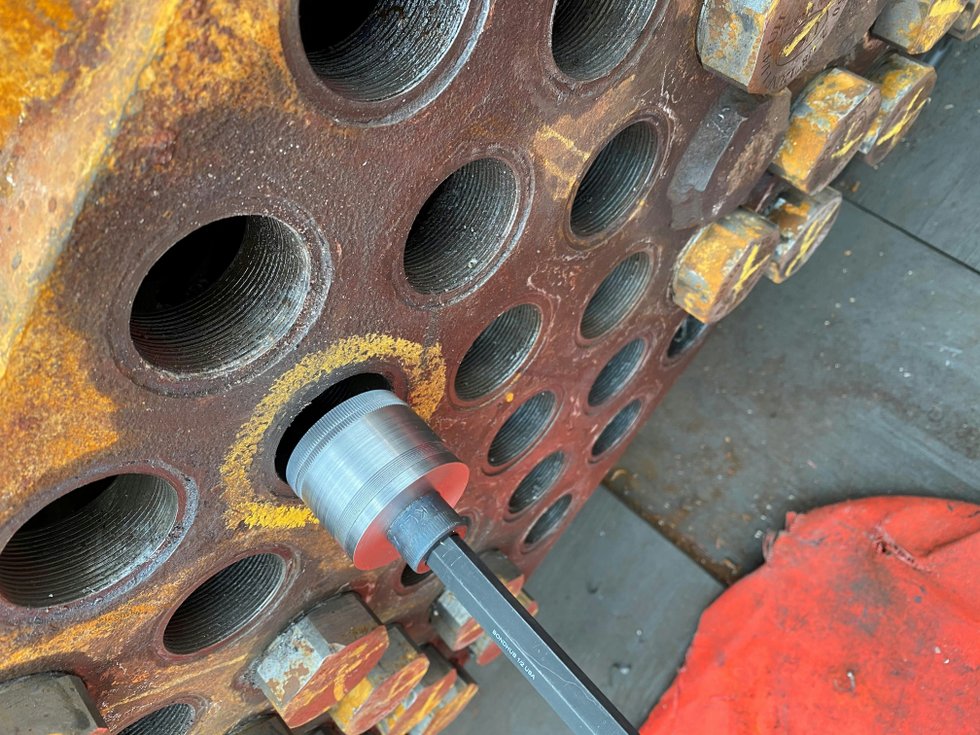
Welded tapered plugs permanently seal leaking tubes by welding the plug to the tube or tube sheet. While effective, the process introduces operational challenges that conflict with modern maintenance priorities.
Hot work and safety exposure
Welding inside or near heat exchangers requires hot work permits, fire watches, atmospheric monitoring and additional safety oversight. In confined spaces, these requirements add complexity and risk. Many facilities aim to reduce hot work wherever possible to improve safety performance and simplify coordination.
Extended downtime
Weld preparation, execution and potential post-weld inspection all add time to an outage. When multiple tubes must be plugged, these steps compound quickly. Delays in one area often affect the broader turnaround schedule.
Heat-affected zone concerns
Welding introduces localized heat into the tube sheet and adjacent tubes. This can alter metallurgical properties and introduce residual stresses. Over time, these effects may contribute to cracking or degradation around the repair area.
Permanence and limited flexibility
Welded plugs are typically permanent. If operating conditions change, or if a tube must be reopened, removal is labor-intensive and may damage the tube sheet. That lack of flexibility can complicate long-term maintenance planning.
The mechanical plug advantage
Mechanical-style tube plugs eliminate welding entirely. Instead of relying on fusion, they create a pressure-tight seal through controlled mechanical expansion. This difference simplifies installation and reduces risk.
No welding required
Mechanical plugs require no hot work. Installation is performed using torque or expansion tooling that activates the sealing mechanism. Removing welding from the process reduces:
• Permit requirements
• Fire watch personnel
• Safety exposure
• Cross-discipline coordination
For facilities focused on reducing confined space hazards, this is a significant advantage.
Faster installation
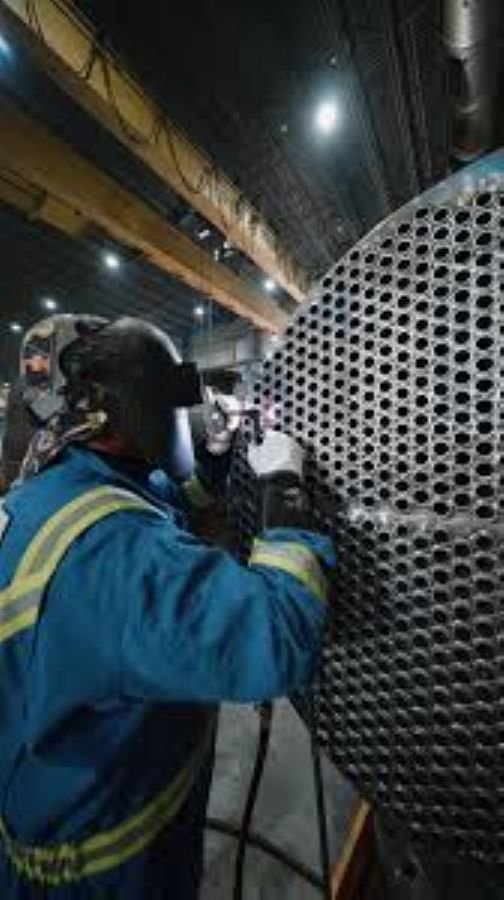
Mechanical plugs can typically be installed in minutes. There is no weld prep, no cooling period, and no weld inspection. This shortens outage duration and lowers labor requirements.
In large exchangers with numerous degraded tubes, the time savings are substantial.
Repeatable performance
Weld quality can vary depending on access, conditions, and technician skill. Mechanical plugs, when installed per specification, provide consistent radial expansion and sealing performance.
This repeatability improves reliability and reduces the likelihood of rework.
Protection of tube sheet integrity
Because no heat is introduced, the surrounding metallurgy remains unchanged. There is no heat-affected zone and no welding-induced stress. Preserving tube sheet integrity is especially important in critical or high-pressure services.
Removability
Many mechanical plugs can be removed if needed. This provides flexibility for temporary isolation, inspection-driven maintenance or process changes. Reversibility aligns with modern asset management strategies that prioritize adaptability over permanent alteration.
Performance considerations
Operators often question whether mechanical plugs can match the holding power of welded tapered plugs. Properly engineered mechanical plugs are designed to:
• Withstand rated operating and test pressures
• Resist vibration and thermal cycling
• Maintain seal integrity over time
• Prevent migration under flow conditions
Performance depends on correct sizing, material selection and installation procedures. When these factors are controlled, mechanical plugs provide dependable pressure isolation without welding.
Impact on turnarounds
Turnarounds are tightly scheduled and high-cost events. Any solution that reduces uncertainty improves execution. Mechanical plugs support efficient planning by:
• Eliminating hot work bottlenecks
• Reducing inspection dependencies
• Allowing faster task completion
• Minimizing rework risk
Maintenance teams can install mechanical plugs alongside other mechanical activities without waiting for welding resources or inspection clearance. This flexibility improves schedule control.
Total cost perspective
Unit price alone does not reflect the full cost of tube isolation. Welded tapered plugs often require:
• Certified welders
• Permit coordination
• Fire watch coverage
• NDE or visual inspection
• Additional downtime
Mechanical plugs remove many of these cost drivers. Reduced labor, shorter outages and simplified logistics frequently offset any difference in component price. Over multiple maintenance cycles, the savings can be significant.
Why Torq N’ Seal Heat Exchanger Plugs
Torq N’ Seal Heat Exchanger Plugs are engineered to deliver the advantages of mechanical sealing in demanding industrial environments. Key benefits include:
• Controlled mechanical expansion for secure sealing
• Engineered for pressures up to 7,000 psi
• Quick installation using only a standard torque wrench
• No welding or hot work
The installation process is simple and repeatable, helping maintenance teams isolate leaking tubes efficiently while preserving tube sheet integrity. For operations that prioritize safety, reduced downtime and reliable performance, Torq N’ Seal provides a practical alternative to welded tapered plugs.
Modernizing tube isolation
Industry expectations continue to evolve. Facilities are under pressure to improve safety metrics, shorten outages and protect long-term equipment health.
Mechanical-style tube plugs align with these objectives. By eliminating hot work, reducing installation time and providing consistent sealing performance, they address the limitations inherent in welded tapered plugs.
For many operators, the decision is no longer whether mechanical plugs can replace welded solutions — it is how quickly they can standardize on a safer and more efficient method.
For more information, visit torq-n-seal.com, email plugs@torq-n-seal.com or call (201) 641‑2130.