
NOTE: The sponsor of this content may contact you with more information on this topic. Click here to opt out from sharing your email address with this sponsor. (This link will not unsubscribe you from any other BIC email list).
Nobody schedules an emergency. That is what makes demolition work inside a live refinery or chemical plant, under emergency conditions, one of the most demanding scopes in the industrial services sector. It is also one of the least understood, even by people who manage capital projects and turnarounds for a living.
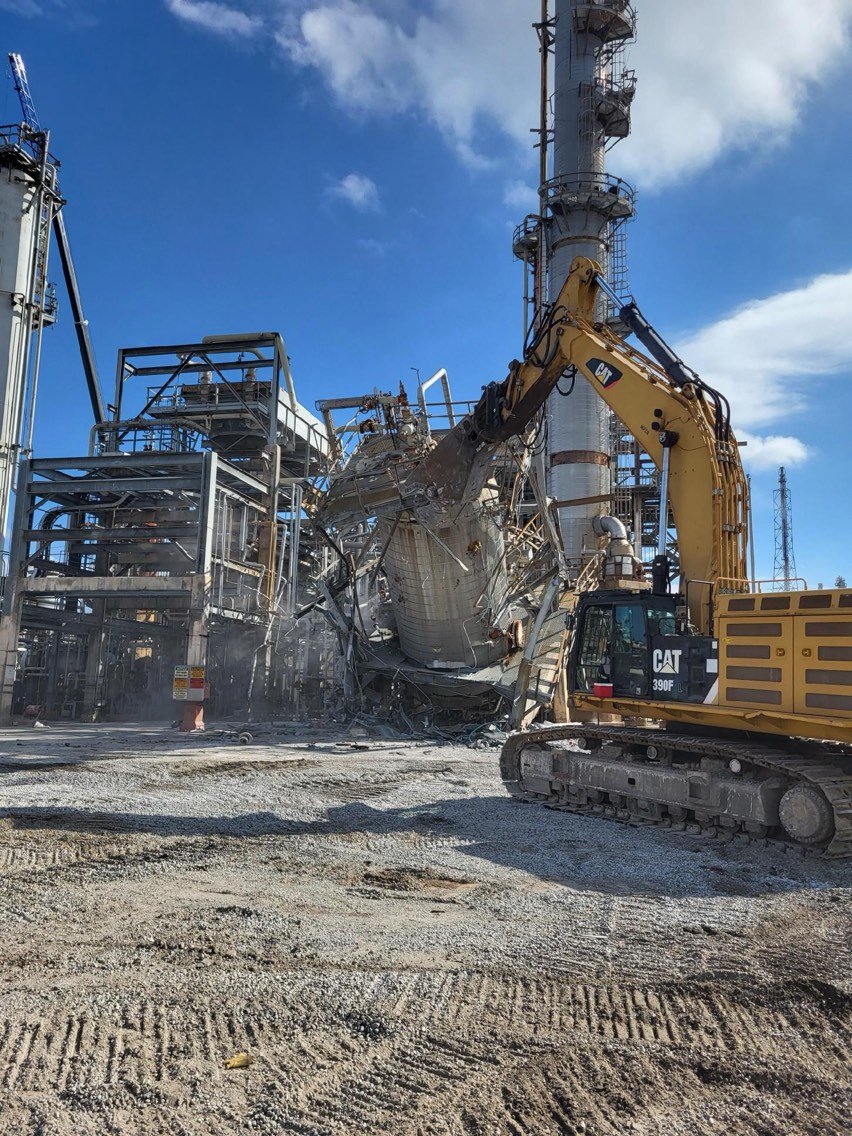
The assumption from the outside is that emergency demolition is just regular demolition done faster. Get a crew out there, cut it up, haul it off. But anyone who has experienced an equipment failure at an operating facility knows the reality is nothing like that. The speed is real. So is the pressure. But what makes emergency work genuinely different is the density of competing requirements that all converge at the same time, in the same space, with almost no lead time to sort them out.
The first few hours set the tone
When a piece of equipment fails inside a plant or a catastrophic event takes place, the first call usually goes to the contractor that already has a relationship with the facility. There is no time for a 30-day bid cycle. A site visit might happen on a Friday, a proposal on Saturday, and mobilization on Monday morning. In some cases, crews are walking the damage zone within hours of the incident.
That timeline changes everything. On a planned project, a demolition contractor has weeks to study drawings, walk the site, coordinate with plant departments and build a sequenced work plan. In an emergency, all of that still must happen. It just happens in parallel, often with incomplete information, and with people meeting each other for the first time.
The contractor who walks into that environment needs to already understand how the plant operates. Not just the demolition scope, but the way operations, safety, project management and engineering interact on a daily basis. Because in the first few hours of an emergency project, nobody has time to teach someone the basics.
It is not just demolition. It is navigation.
What surprises people about emergency demolition in a live facility is how much of the work has nothing to do with cutting steel.
Consider a scenario where a failed piece of process equipment needs to be removed from a congested area. The damaged equipment might be flanked on multiple sides by live units that are still in operation. There may be active lines and utilities running through the work zone. Overhead pipe bridges restrict crane access and create height limitations for every load that moves through the area.
Before a single cut is made, the crew must understand the full constellation of constraints. Safety controls and real estate are constant factors. When damaged equipment must be removed, there is often no room to stage materials for removal in the affected area. This means materials may need to be staged in other areas of the plant prior to final disposition off site, and when space is tight, this means you may need to perform hot work in multiple operating areas at one time.
Plants use infrared camera systems, portable gas monitors and fixed detection equipment to watch for flammable or toxic conditions in real time. These systems are sensitive enough that striking a cutting torch in the wrong location can trigger an alarm, sending the operations team into response mode and stopping all work until the situation is assessed and cleared.
That is not hypothetical. In a facility with thermal imaging positioned around adjacent tanks and process units, even routine torch work in a nearby staging area can register on the monitors. The fix might be as simple as installing shielding to block the camera's line of sight while the contractor manages its own atmospheric monitoring. But arriving at that solution requires understanding where those cameras are, what they are looking for and communicating with various operations, shifts and safety teams to ensure hot work permits and working times are understood, not just in the immediate demolition area, but in the staging areas as well.
A contractor who does not know how to ask those questions before mobilizing is going to find out the hard way, and it is going to cost the plant time it does not have.
The stakeholder problem
Every plant professional knows the tension between operations, projects and safety. On a normal day, those departments coordinate through established channels, scheduled meetings and defined handoff protocols. On an emergency project, those channels get compressed or bypassed entirely.
The demolition contractor often becomes the entity that exposes gaps between these groups. A permit may reflect one scope of work while the actual conditions in the field have changed. Shared resources such as cranes and equipment ready to install new components may be in the way. A staging area selected by the project team may sit inside a monitoring zone that operations did not know would be affected. An escorted haul route approved for one shift might not be the same for another shift later the same day.
None of these are catastrophic failures. They are the normal friction of a complex operating environment. But in an emergency setting, where every shift counts and the production unit that makes the plant its revenue is sitting idle, each one of these small misalignments compound into real schedule impact.
The contractors who handle this well are the ones who understand that their job is not just execution. It is coordination. They show up knowing who the stakeholders are. They sit in the morning meetings carefully digesting all scopes of work. They report back at midday even when nobody asked. They read the JSA to the plant representative and walk through the procedure before asking for a permit, not after. It is not glamorous work, but it is the work that determines whether a project runs smoothly or grinds to a halt over a miscommunication that could have been avoided with a short conversation.
Plan A rarely survives first contact
One of the defining characteristics of emergency demolition is how quickly the original plan can become obsolete.
A crew might mobilize with hydraulic shears and grapples, expecting to remove a damaged structure mechanically. On arrival, they discover the material is safer to dismantle with manual methods using cranes and other equipment. The pivot to rigging and hoist work may seem straightforward, but it introduces an entirely different set of permit requirements, safety considerations and logistic and site requirements.
Or the scope itself might expand once the full extent of the damage becomes visible. What looked like a straightforward removal can turn into a forensic preservation exercise once insurance investigators get involved. Suddenly, every cut needs to be documented. Every piece needs to be labeled, photographed and staged in a specific sequence so that the failure can be reconstructed later. The demolition contractor is no longer just removing material. They are maintaining a chain of custody for evidence while still operating under the same compressed timeline.
These are not edge cases. Equipment failures in operating plants almost always involve some combination of surprises. Refractory materials that need special handling, transportation and disposals. Tubes that may carry elevated background radiation from years of heat exposure and need to be decontaminated before they leave the facility. Structures that do not match the drawings because the drawings are 40 years old and nobody updated them after the last modification.
The contractors who thrive in this environment are the ones who show up with Plans B and C already in mind. They bring multiple cutting methods. They have engineering resources they can engage in short notice. They carry drone capability to survey conditions in areas that are too congested, too deteriorated or too hazardous to access on foot. They treat every assumption as provisional until verified in the field.
The invisible readiness
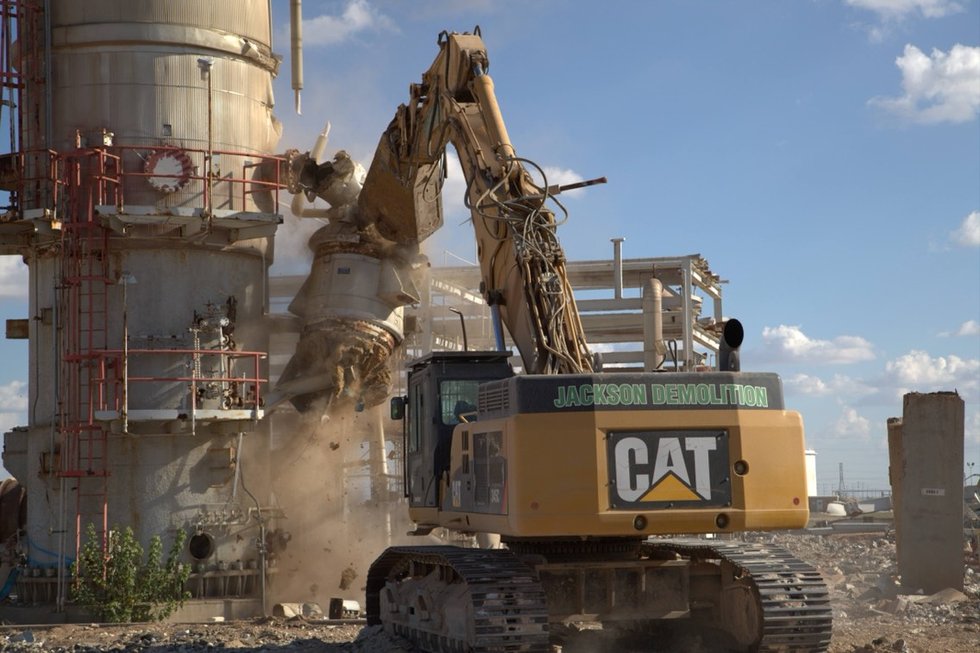
What plant operators and management rarely see is the infrastructure behind a contractor's ability to respond on short notice. Getting a crew through the gate at a major refinery or chemical plant requires clearing compliance requirements that are among the most stringent in any industry. Background checks, drug and alcohol screening programs, site-specific safety training, area-specific orientations, and credentialing systems all must be current before a worker can badge in. If any of it has lapsed, that worker is not getting through the gate, no matter how urgent the job is.
The contractors who can genuinely respond to emergency work are the ones who maintain this readiness year-round, across their workforce, as a cost of doing business. Their people have worked in these facilities before. They know the protocols. They understand the culture. They speak the language.
That last point matters more than it might seem. Plant professionals can tell within minutes whether a contractor has real experience in their environment. The terminology, the familiarity with permitting processes, the way a crew interacts with operations personnel during a shift change. These are subtle signals, but they carry enormous weight when a plant is deciding who to trust with an emergency scope inside a live operating facility.
Preparing before the phone rings
The most practical thing a plant can do is not wait for an emergency to figure out who to call. Establishing a master service agreement with a qualified demolition contractor eliminates the procurement cycle that can consume weeks under normal circumstances. It allows the plant to issue a work order and have a crew mobilizing the same day.
But an MSA is only as good as the contractor behind it. The right partner for emergency work is one that already understands the operational environment, maintains a workforce that can clear facility access requirements without delay, and has demonstrated the ability to manage the coordination, communication and adaptability that this type of work demands.
With hurricane season approaching along the Gulf Coast and equipment failures remaining an unpredictable reality at every operating facility, the question is not whether the next emergency will happen. It is whether the response will be a scramble or a phone call to a team that is already prepared to walk through the gate.
For more information on emergency demolition services in refinery and plant environments, visit www.jacksondemolition.com.