NOTE: The sponsor of this content may contact you with more information on this topic. Click here to opt-out from sharing your email address with this sponsor. (This link will not unsubscribe you from any other BIC email list).
Induction heating for specific scopes has become a preferred solution for many industrial heat treatment applications, where code allows offering faster time-to-temperature, improved uniformity, and a safer alternative to traditional flame-based methods. Yet, despite its advantages, the way induction equipment is deployed and supported in the field has not evolved at the same pace.
Across construction, fabrication, and maintenance environments, teams are often left to manage induction systems with inconsistent processes, limited support, and outdated analog interfaces. Equipment may be available, but the surrounding workflows, programming, paper documentation, setup, and quality control can introduce unnecessary complexity.
As a result, what should be a precise and efficient heating method can instead become a source of variability. Differences in operator experience, setup quality, and documentation practices can lead to delays, rework, and increased pressure on project teams to troubleshoot issues in real time.
As expectations for quality assurance, traceability, and schedule certainty continue to grow, the challenge is no longer just accessing induction equipment; it’s ensuring it can be used consistently, correctly, and with confidence across every job site.
A smarter approach to induction heating
To address these challenges, a more integrated model that combines equipment, digital tools, and technical support into a single, supported solution has arrived.
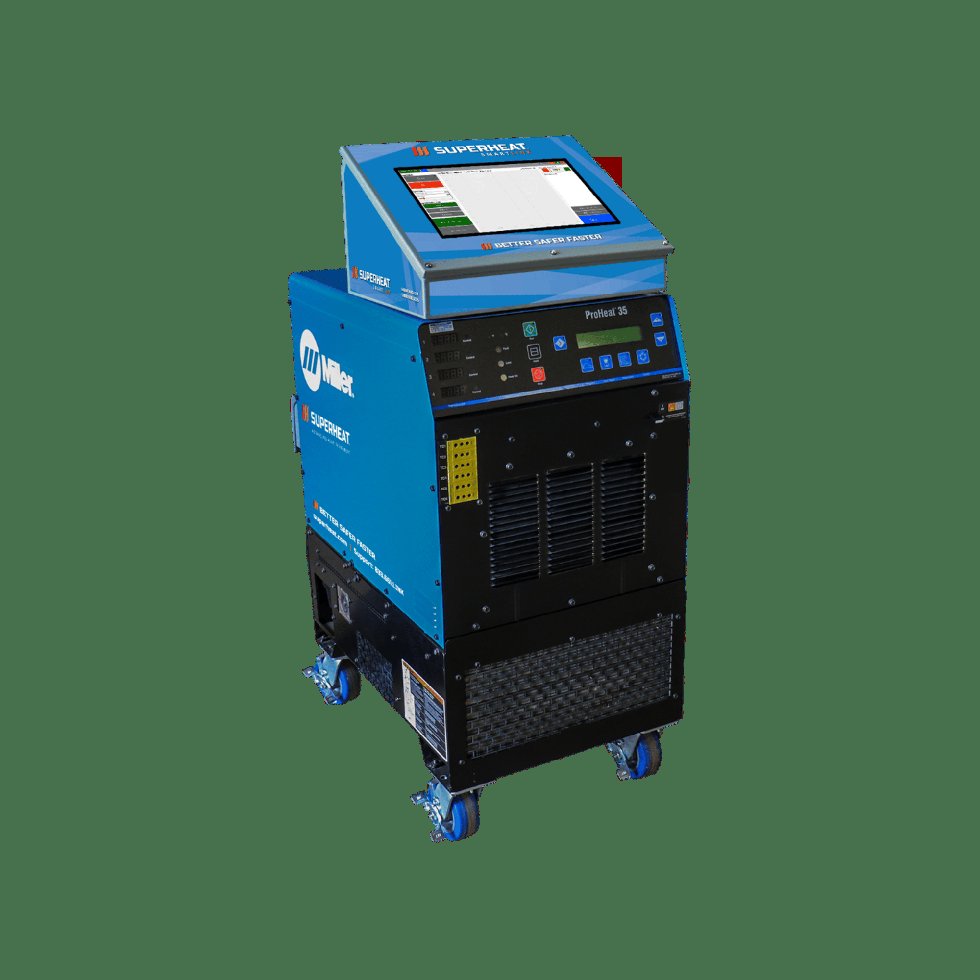
This shift is reflected in Superheat’s induction heat treatment solutions, built around Miller ProHeat™ 35 consoles and enhanced through Superheat SmartLink™, a digital interface designed to simplify operation, improve data management, and connect users with expanded resource options needed to execute cycles reliably.
Rather than treating induction heat treatment equipment as a standalone rental or purchase, this approach positions it as part of a flexible, supported program. Organizations can manage induction in-house using rental, leased, or purchased equipment, enhance the performance of their existing Miller ProHeat™ 35 units, or transition to full-service execution through Superheat SmartWay™ when additional support is required.
This flexibility allows teams to scale their involvement based on project demands, whether that means maintaining control internally or leveraging a fully supported, turnkey solution under the Superheat SmartWay™ umbrella.
Simplifying operation and reducing variability
One of the most common challenges in induction heat treatment is the reliance on analog programming and operator experience, particularly when working with systems like the Miller ProHeat™ 35. Traditional workflows often lead to inconsistencies between crews, programming errors that affect quality and timing, and longer onboarding cycles for new operators.
Superheat SmartLink™ introduces a digital control layer that helps standardize how induction systems are programmed and operated. Through a modern, intuitive interface, operators can conveniently manage heat cycles, monitor system performance, and execute work with greater consistency across job sites.
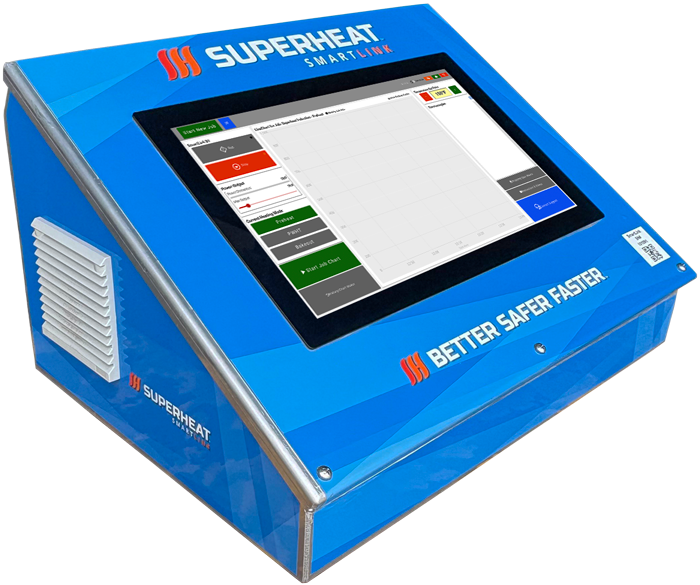
By reducing dependence on manual inputs and individual interpretation, this approach supports more repeatable, predictable results, regardless of crew size, experience level, or project location.
Strengthening QA, traceability, and documentation
As quality requirements increase, documentation has become a critical component of heat treatment execution rather than a secondary task. However, many induction workflows still rely on fragmented or outdated recording methods, making it difficult to ensure data integrity or support audit requirements.
With Superheat SmartLink™, data capture and documentation are integrated directly into the process. Heat cycle information is automatically recorded and digitally archived, allowing it to be easily accessed, organized, and exported as needed.
This shift not only improves traceability but also reduces the administrative burden on field teams, helping ensure that quality documentation is accurate, consistent, and readily available when required.
Built-in support: Bridging the experience gap
Another persistent challenge with induction equipment, particularly in rental or lease scenarios, is the lack of accessible technical support.
In many cases, equipment arrives on-site with minimal guidance, leaving teams to interpret setup requirements and troubleshoot issues independently. This can slow commissioning, introduce inefficiencies, and increase the likelihood of failed heat cycles.
Superheat SmartLink™ extends beyond the equipment itself by embedding support directly into the user experience. Operators have access to guided setup resources, technical videos, and engineered configuration drawings, and can connect with support when needed.
Depending on project requirements, this support can range from remote assistance to on-site technical expertise, training, or engineering input for more complex applications, helping ensure that teams can execute with confidence regardless of scope.
Consistency at scale across projects and crews
For organizations managing multiple job sites or large workforces, maintaining consistency across crews is often one of the most difficult challenges. Variations in setup methods, operator experience, and data capture practices can lead to inconsistent outcomes and increased project risk. By standardizing programming workflows and providing centralized access to validated resources, Superheat SmartLink™ helps reduce this variability.
When combined with optional oversight and support capabilities, this approach enables organizations to apply consistent practices across all projects, improving alignment between field execution, quality requirements, and reporting expectations.
A flexible model built around project needs
Induction heat treatment requirements can vary significantly depending on scope, schedule, and internal capabilities. Recognizing this, Superheat’s approach is designed to be adaptable rather than prescriptive.
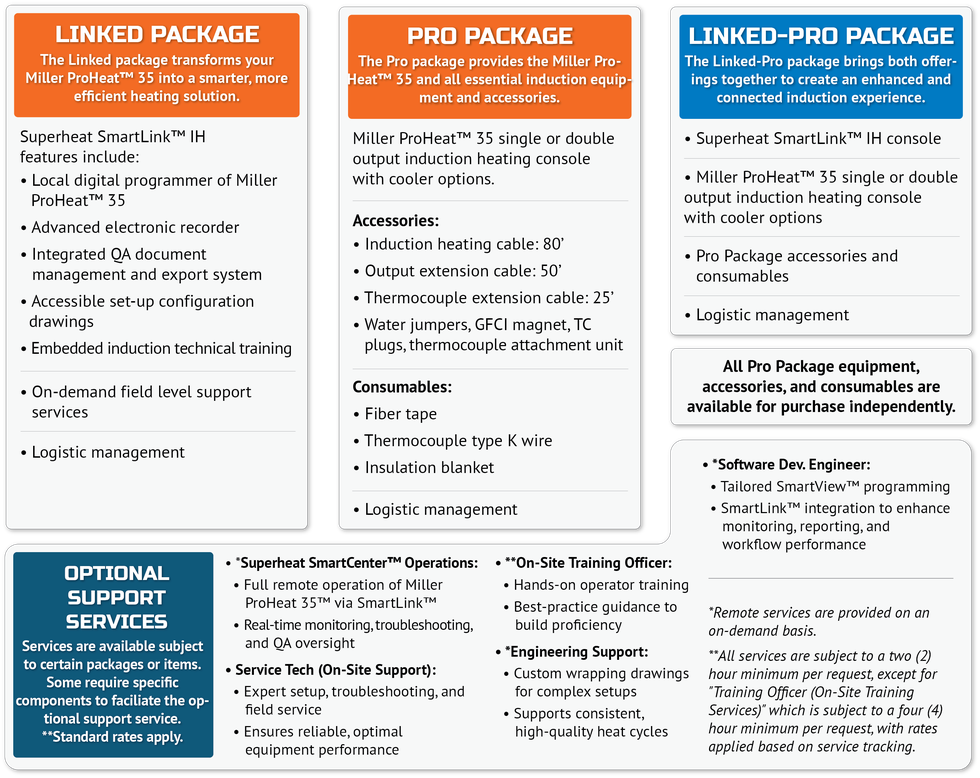
Induction packages can be configured to align with a project's specific needs, combining Miller ProHeat™ 35 consoles, SmartLink™ integration, and the accessories and consumables required for execution. These packages can also be supplemented with optional support services ranging from remote monitoring and technical assistance to on-site training, engineering support, and full operational oversight through the Superheat SmartCenter™.
This structure allows organizations to build a solution that fits their exact scope, whether they require minimal support for self-performed work or a fully managed, turnkey induction program under the Superheat SmartWay™ model.
Moving toward smarter, more reliable induction heating
Untitled design - 1
As induction heating continues to grow in adoption, expectations around performance, consistency, and traceability are evolving alongside it. Access to equipment alone is no longer enough. Success increasingly depends on how effectively that equipment can be integrated into a broader process, one that supports reliable execution, clear documentation, and consistent outcomes across every project.
By combining Miller ProHeat™ 35 systems with Superheat SmartLink™ and a flexible, supported service model, induction heat treatment can move from a complex, operator-dependent activity to a more controlled and predictable process. The result is a shift from uncertainty to confidence, enabling teams to execute induction heating with greater clarity, alignment, and assurance of the outcome.
To learn more about Superheat SmartLink™, induction equipment packages, or full-service induction solutions through Superheat SmartWay™, visit www.superheat.com/smartlinkinduction or contact the team directly at 1.888.508.3226 to discuss your next project today.