
A wrench in the works is usually just a figure of speech.
For one Houston stadium facility, it became a very real operational problem.
It started with a call on a Monday. A wrench had fallen 220 feet down an 18-inch line off a steam drum, traveling past two 45-degree elbows before landing in four feet of water. The facility needed to locate the object, understand the conditions inside the line and retrieve it without turning an unexpected incident into extended downtime.
That is where the right technology and the right team behind it made the difference.
TEAM mobilized quickly and deployed remote visual inspection technology, navigating the full length of the line under tight conditions and limited visibility. After four hours on site and just over an hour locating and retrieving the object, the wrench was recovered and the facility returned to operation the same day.
For team leads Dillon Peltier and Kaleb Burnett, it was not an ordinary job. But it was exactly the kind of challenge advanced inspection technology is built to solve.
When the unexpected happens, access matters
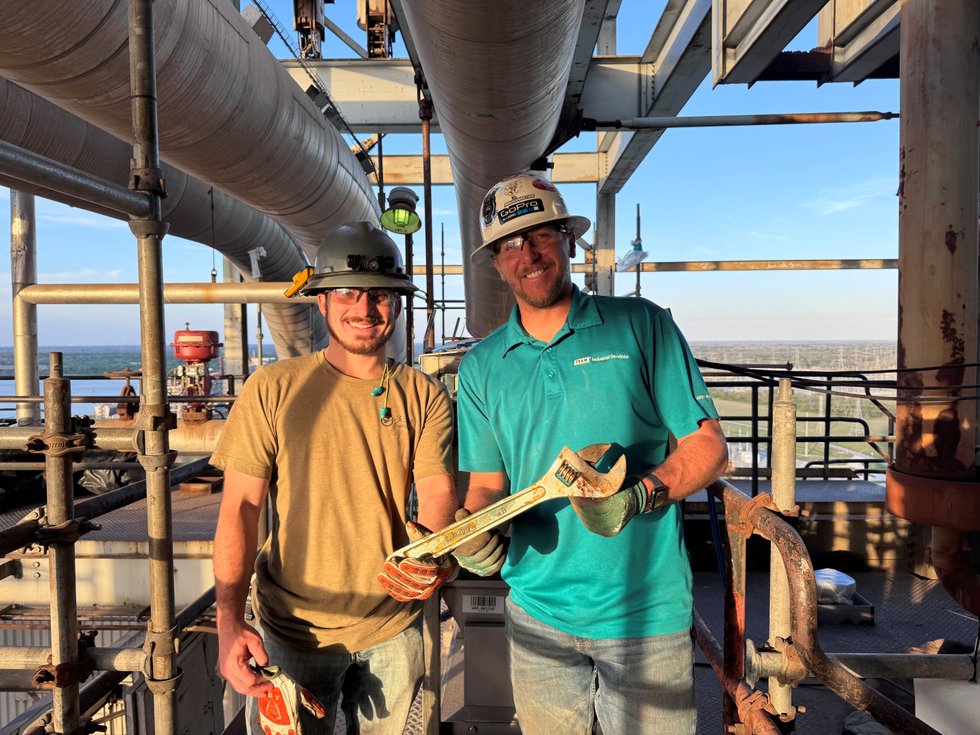
TEAM Inc. wrench
Industrial facilities are built around precision, planning and control. But even the most carefully managed operations can face unexpected challenges. A misplaced tool, an inaccessible line or an urgent unknown can create real safety, quality and downtime concerns.
In those moments, the question becomes simple: how quickly can teams see what is happening, verify the condition and act with confidence?
Traditional inspection methods often require more time, more access planning and, in some cases, more disruption. Just a few years ago, inspecting certain live or difficult-to-access assets could require shutdowns, cranes, rigging and people placed close to challenging environments. The process was often effective, but it could be slow, complex and heavily dependent on what an inspector could safely reach and document in the moment.
Drone and remote visual inspection technology has changed that equation.
Today, industrial drones can help teams collect high-resolution imagery, measurements and visual data from areas that are difficult, hazardous or inefficient to access through traditional means. In the case of the Houston stadium facility, that meant sending inspection technology into the line instead of relying on guesswork or more invasive methods.
The result was faster visibility, safer decision-making and a same-day recovery.
Data that does more than document
The value of drone inspection does not end when the flight or inspection is complete.
When a person walks an asset, the information gathered is shaped by what can be seen, recorded and remembered in the field. Even with experienced inspectors, some context can be lost between the asset, the notes and the final report.
Drone inspection creates a more durable record.
Time-stamped, high-resolution visual and measurement data can be reviewed, shared and referenced long after the inspection is complete. A 3D model or point cloud can support engineering analysis, repair planning and future inspection comparisons. Instead of asking what was seen last time, teams can return to a documented baseline and track how conditions change over time.
That kind of visibility helps inspection, engineering, maintenance and reliability teams work from the same information. It also helps turn a one-time observation into a referenceable asset record.
Not every drone belongs in an industrial facility
The word “drone” can make the technology sound simple. In industrial environments, it is anything but.
Consumer drones are not designed for complex facilities where metal enclosures, confined spaces and challenging navigation conditions can disrupt compass and control systems. Industrial drone inspection requires purpose-built platforms selected for the operating environment and the inspection objective.
Some applications require even more specialized capability. Performing ultrasonic thickness measurements on elevated vessel walls without scaffolding, for example, requires a drone platform capable of making controlled contact with an asset surface while airborne.
Only a limited number of inspection companies own this type of equipment. TEAM is one of them, operating two units on a regular deployment basis rather than treating the technology as a novelty capability.
That investment matters because advanced tools are only useful when they are available, proven and supported by people who know how to apply them in the field.
A wrench, a line and a bigger lesson
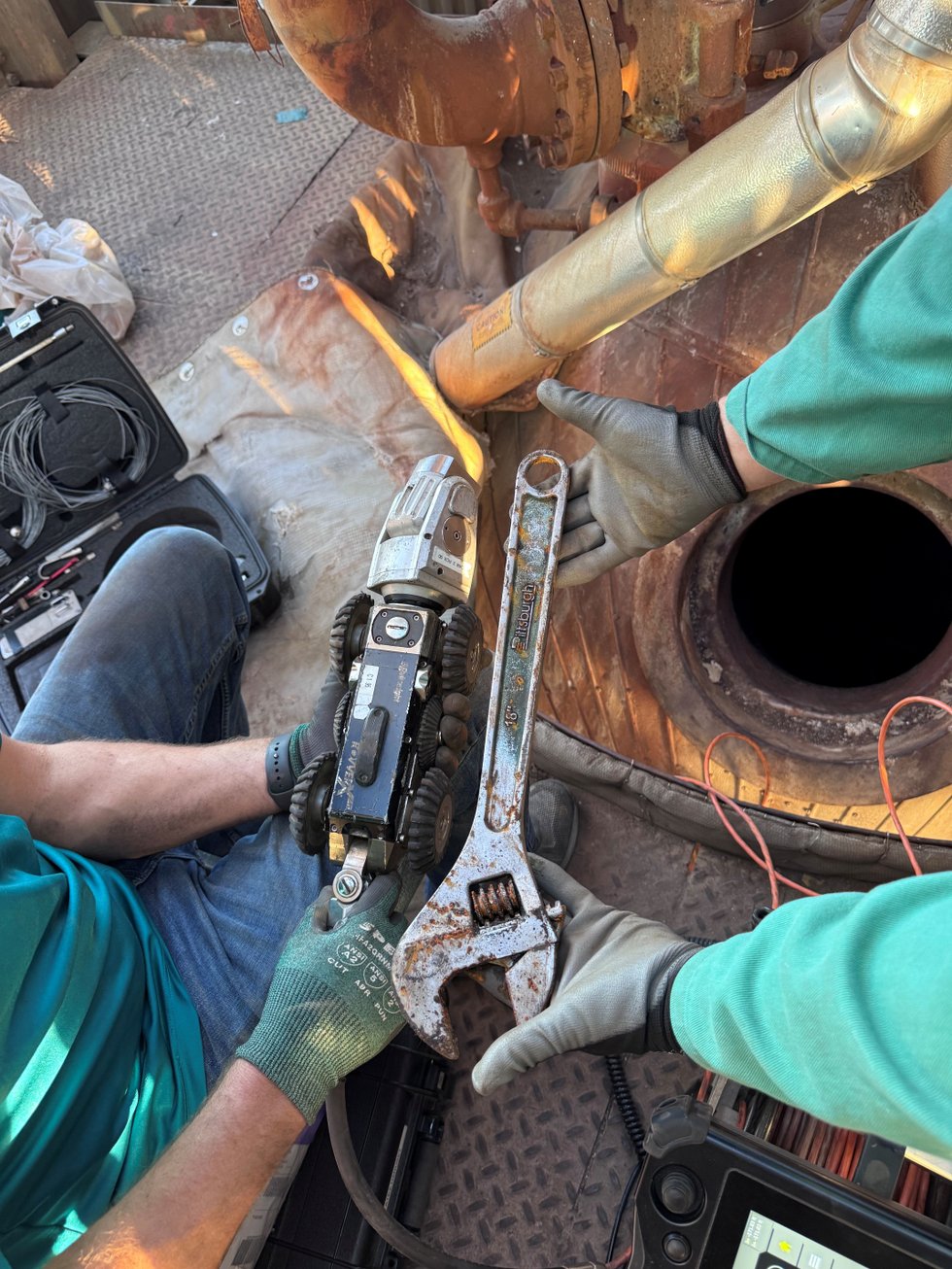
TEAM Inc. wrench found
The Houston stadium recovery is a clear example of what advanced inspection technology can make possible.
A wrench dropped 220 feet into a line could have become a prolonged operational issue. Instead, TEAM was able to help the facility see inside the line, locate the object, retrieve it and return to operation the same day.
That outcome was not just about equipment. It was about matching the right technology to the environment, interpreting the findings in context and connecting inspection data to action.
That is where drone inspection continues to evolve from a specialty service into a strategic capability.
The next generation of inspection
The inspection industry is moving quickly. Tools such as UT at height, LDAR mapping and photogrammetric 3D reconstruction are already changing what teams can see, record and act on in the field.
The next phase will build on that foundation. Autonomous monitoring and AI-assisted anomaly detection will depend on accurate, recorded and permanent data. Facilities that build strong inspection data practices now will be better positioned to use predictive capabilities as they mature.
TEAM has been exploring drone technology since the 1980s. While the tools have advanced, the core principle remains the same: match the technology to the environment, gather the right data and connect every finding to a clear path forward.
Through Inspect360 and the broader TEAM360 platform, TEAM’s drone capabilities support more than inspection. They help operators turn field challenges into informed decisions.
Because when a wrench gets thrown into your plans, the right response is not just to find it.
It is to keep operations moving. Learn more about TEAM drone and robotics solutions.