
NOTE: The sponsor of this content may contact you with more information on this topic. Click here to opt out from sharing your email address with this sponsor. (This link will not unsubscribe you from any other BIC email list).
How operators are navigating rising expectations around methane detection, repair, and reporting
For years, methane emissions from pipeline systems were largely treated as a secondary concern — something managed through routine maintenance and traditional leak surveys.
That reality has changed.
Today, methane reduction sits at the intersection of regulatory compliance, operational performance, investor expectations, and environmental accountability. International organizations like the International Energy Agency (IEA) and the United Nations Environment Programme (UNEP) have emphasized that reducing methane emissions from fossil fuel operations is one of the fastest and most cost-effective ways to slow near-term climate warming.
For pipeline operators, however, the challenge is far from simple. Teams are tasked with maintaining reliable energy delivery while adapting to evolving regulations, managing aging infrastructure, and producing measurable emissions reductions across complex pipeline networks.
Leak Detection and Repair (LDAR) has emerged as a central pillar in addressing these demands. But the industry is now asking a new set of questions:
- How have modern detection technologies expanded what LDAR programs can achieve?
- How can operators move beyond fragmented inspections toward integrated methane management strategies?
- And how can these programs scale across thousands of miles of pipeline infrastructure?
Why Pipeline Methane Is Under the Microscope
Methane accounts for roughly 30% of global warming since the Industrial Revolution, and the energy sector is responsible for more than one-third of human-caused methane emissions.
Recent global tracking estimates that fossil fuel operations release around 120 million tons of methane annually. Earlier analyses suggest that roughly 40% of these emissions could be avoided at no net cost using existing technologies and operational improvements.
Many of those opportunities center on improved leak detection, faster repair timelines, and better operational practices.
Despite growing awareness, progress remains uneven. Even with current commitments, global methane emissions are still projected to increase slightly by 2030.
For pipeline operators, the implications are clear: when policymakers and investors view emissions reductions as achievable and economically practical, expectations quickly follow.
The Regulatory Wave Is Here
Methane regulations are rapidly evolving across major energy markets. For pipeline operators working across multiple jurisdictions, these policies are reshaping how LDAR programs must operate.
Europe: Methane Regulation With Teeth
The European Union’s Methane Regulation (EU 2024/1787), which took effect in August 2024, requires fossil fuel operators to measure, monitor, report, and verify methane emissions while actively minimizing leaks throughout the energy value chain.
For pipeline operators and midstream companies, this includes mandatory LDAR surveys and structured monitoring programs. The regulation also introduces a pathway to apply equivalent methane standards to imported fossil fuels, meaning suppliers outside the EU may need to align with the same requirements to maintain market access.
In practice, the regulation pushes operators toward structured methane monitoring frameworks with defined survey intervals and documented repair timelines.
United States: From Safety-Only to Methane-First
In the United States, methane policy is increasingly merging environmental and safety priorities.
The EPA’s final methane rule for oil and natural gas operations establishes nationwide limits on methane and volatile organic compounds from new and existing facilities. It also formally recognizes advanced monitoring technologies — including satellites, aerial surveys, and continuous monitoring systems — as alternatives to conventional LDAR approaches.
The rule introduces a Super Emitter Program designed to identify large methane releases and trigger rapid response actions.
Meanwhile, PHMSA’s Advanced Leak Detection and Repair Final Rule, issued in January 2025, modernizes expectations for pipeline systems. The rule requires gas distribution, transmission, and gathering operators to implement advanced leak detection programs capable of identifying and addressing leaks beyond those considered immediately hazardous.
Survey frequencies and patrol requirements are also tightened based on pipeline location and risk classifications.
Canada: Higher Targets, Faster Repairs
Canada has set one of the most ambitious methane goals globally: a 75% reduction in oil and gas methane emissions by 2030 compared to 2012 levels.
The proposed framework would require quarterly LDAR inspections at higher-risk facilities and annual inspections at lower-risk sites. Significant emission sources would need to be repaired within 24 hours, while smaller leaks must be addressed within 90 days.
Global Pressure Is Building
Even in regions where methane regulations are still evolving, voluntary initiatives and international commitments are accelerating expectations.
The Global Methane Pledge, supported by more than 150 countries, calls for collective methane reductions of at least 30% below 2020 levels by 2030.
In the oil and gas sector, the Oil and Gas Methane Partnership 2.0 (OGMP 2.0) has become a leading framework for measurement-based emissions reporting. The initiative encourages operators to move away from generalized emissions factors toward detailed, asset-level methane data and defined methane-intensity metrics.
Operational Reality for Pipeline Systems
While methane reduction goals are gaining momentum, the practical challenges facing pipeline operators remain significant.
Aging Infrastructure
Many pipeline systems were designed decades before methane emissions became a central operational metric. In North America, large portions of the natural gas grid date back several decades, with some infrastructure originating in the early twentieth century.
Research suggests that aging infrastructure and legacy materials contribute significantly to methane emissions from transmission networks.
Studies in cities such as Baltimore and Pittsburgh found leaks from transmission pipelines occurring more frequently — and emitting roughly four times more methane — than current national estimates suggest.
Geographic Complexity
Pipeline operators must manage extensive rights-of-way spanning thousands of miles across varied terrains and jurisdictions. Compressor stations, valves, metering facilities, and long stretches of buried pipe require regular inspection, often under tight access windows and competing maintenance priorities.
Workforce Constraints
Field crews face increasing technical demands while staffing remains limited. As LDAR requirements grow more sophisticated, operators must deploy detection technologies, manage data collection, and maintain audit-ready records across geographically dispersed networks.
A New Layer of Visibility
Another factor raising the stakes is transparency.
A growing constellation of satellites and remote-sensing technologies now monitors methane emissions globally. Platforms such as MethaneSAT and Carbon Mapper combine regional mapping and precision imaging to detect methane plumes and identify emitting infrastructure across the oil and gas value chain.
These technologies can publicly highlight “super-emitters,” increasing reputational pressure for operators whose emissions appear in public datasets.
Research has already suggested that methane emissions from U.S. pipelines may be significantly under-estimated in official inventories, with transmission networks releasing between 1.2 and 2.6 million tons of methane annually.
Why Advanced LDAR Is Becoming the Industry Standard
Modern LDAR programs are evolving beyond periodic manual inspections.
Today’s leading programs combine multiple detection technologies to improve coverage and accuracy.
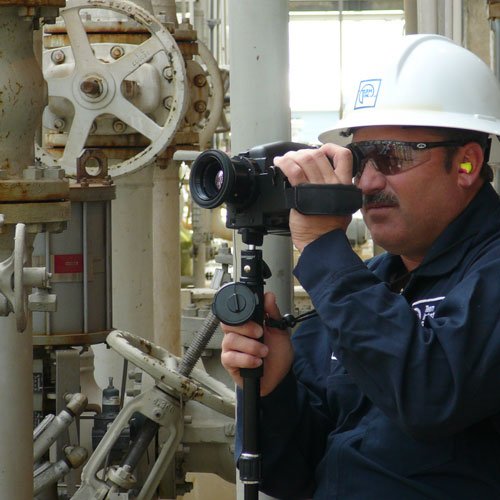
Instrument-based monitoring methods such as Method 21 analyzers and optical gas imaging (OGI) remain core techniques for identifying leaks at valves, flanges, and other equipment components.
To cover long pipeline corridors more efficiently, operators increasingly integrate aerial inspections, drone-mounted sensors, and methane-detecting LiDAR systems capable of scanning remote infrastructure that may be difficult to access on foot.
LDAR has also become increasingly digital.
Centralized software platforms now track equipment inventories, inspection routes, leak classifications, repair activities, and verification results. These systems support compliance with programs like the EPA’s Greenhouse Gas Reporting Program Subpart W, which requires detailed emissions calculations and electronic reporting through the e-GGRT platform.
Research summarized by the Clean Air Task Force suggests that advanced, tiered LDAR programs targeting high-emitting sources can reduce methane leak emissions by up to 90%, while quarterly inspection programs can achieve reductions of around 80%.
The Operational Benefits
While regulatory compliance is a major driver of LDAR adoption, operators often discover additional operational benefits.
When leaks are systematically identified, quantified, prioritized, and repaired, operators can:
- Reduce product loss
- Improve safety conditions
- Gain clearer insights into system performance
For pipeline networks that span thousands of miles, however, the real challenge is scale.
Technology alone is not enough. Effective methane management requires workflows that integrate detection, repair, documentation, and reporting into everyday operational processes.
Advanced LDAR Takes a TEAM
For many pipeline operators, LDAR programs still operate separately from core maintenance and integrity operations.
TEAM Inc. approaches the challenge differently.
Through the TEAM360 platform, leak detection becomes part of a broader asset integrity ecosystem. Inspection, emissions characterization, repair, heat treatment, and digital reporting are integrated into a continuous workflow designed to support both operational and environmental objectives.
Within the platform:
- Inspect360 identifies asset integrity concerns
- Detect360 characterizes emissions sources
- Repair360 restores mechanical integrity
- Heat360 supports long-term system performance
- OneInsight® consolidates inspection and repair data into a unified digital view
Precision at Scale
LDAR programs must be tailored to each pipeline system or facility.
TEAM’s approach begins by identifying applicable regulations, developing detailed component inventories, and aligning inspection methods with operational priorities. Structured workflows, centralized quality assurance processes, and real-time validation help maintain audit-ready inspection records from the outset.
Technicians deploy high-sensitivity infrared cameras and quantitative optical gas imaging to detect methane and volatile organic compound leaks across valves, tanks, flanges, and other assets without requiring shutdowns.
When direct measurement is required, additional technologies — including Hi-Flow samplers, hot-wire anemometers, and acoustic leak detectors — can quantify emission rates and generate datasets suitable for regulatory reporting.
Integrated Detection and Repair
Detecting a leak is only the first step.
Because Detect360 operates alongside Repair360 services, leaks identified during inspections can often be addressed by the same team responsible for the initial detection. Repair capabilities include live leak sealing, composite repairs, hot taps, line stops, and in-service welding.
This integrated approach helps pipeline operators resolve issues without shutting down critical infrastructure or allowing repair backlogs to accumulate.
Supporting the Next Chapter of Pipeline Integrity
Methane emissions are no longer an invisible byproduct of pipeline operations.
They are now a measurable performance indicator tied to regulatory compliance, investor expectations, and operational efficiency.
As regulations tighten and monitoring technologies continue to advance, pipeline operators face increasing pressure to implement more sophisticated methane management programs.
Integrated LDAR strategies — combining advanced detection technologies, coordinated repair capabilities, and robust digital reporting — are emerging as the most practical path forward.
Connect with TEAM
To learn how integrated LDAR programs can help pipeline operators reduce emissions, maintain compliance, and strengthen asset integrity, explore TEAM’s emissions reduction ecosystem.
For more information, visit www.teaminc.com.