
NOTE: The sponsor of this content may contact you with more information on this topic. Click here to opt-out from sharing your email address with this sponsor. (This link will not unsubscribe you from any other BIC email list).
Strengthening the European petrochemical industry during ongoing transformation in a constantly changing world
The European petrochemical industry is undergoing a profound transformation as market dynamics and geopolitical developments reshape the environment. High energy costs, geopolitical uncertainty, sustainability requirements, global overcapacity and evolving customer expectations continue to challenge competitiveness. At the same time, Europe’s strengths - integrated production networks, decades of process expertise, a highly skilled workforce and close cooperation across value chains - continue to provide a solid foundation for building resilience and creating long-term value.

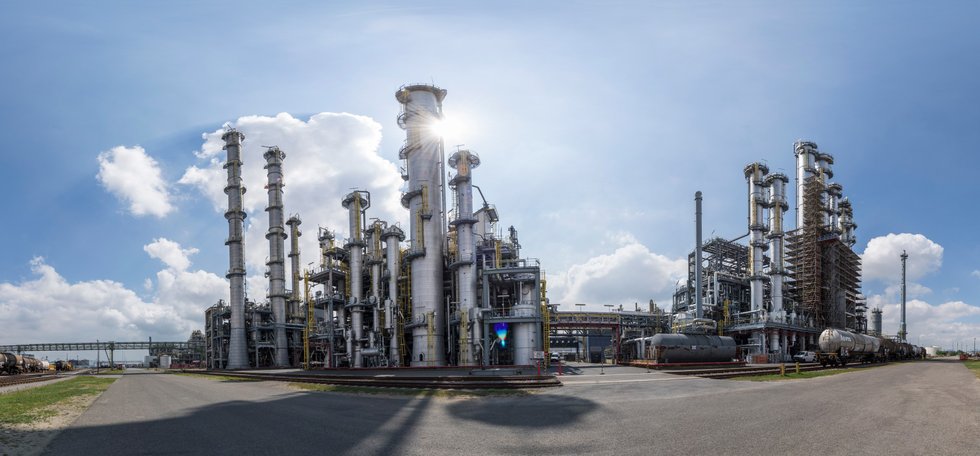
Antwerpen - Oxeno ZAGG 2
In this environment, resilience is gaining importance as a strategic capability. In the petrochemical industry, resilience is the ability to maintain competitiveness and profitability despite disruptions. While some external factors cannot be controlled by individual companies, a range of resilience levers remains firmly within their sphere of influence. Many of the factors that determine resilience are already embedded in the petrochemical industry. The challenge is to keep strengthening them and to translate them into long-term competitiveness.
The new White Paper Building Resilience in the Petrochemical Industry outlines key levers for more resilience that companies can pull to remain competitive in an increasingly challenging market environment. The analysis highlights how operational efficiency reduces exposure to structural disadvantages, how innovation translates knowledge into productivity gains and new business opportunities, and how integrated value chains, regional production networks and long-standing partnerships contribute to flexibility and reliability. Diversified portfolios create options across changing market conditions, while skilled employees ensure that knowledge is continuously applied, expanded and transferred.
Beyond actions at company level, the White Paper also highlights the importance of an essential policy framework to enable the industry’s long-term success across Europe. Even the most capable organizations operate within broader economic and political framework conditions that influence their competitiveness. Competitive industrial energy prices, efficient permitting procedures, investment support and constructive dialogue between industry and policymakers all contribute to a business environment that supports the industrial transformation and future setup. The relationship between company action and policy conditions should therefore not be viewed separately. Long-term competitiveness depends on both.
At Evonik Oxeno, these principles are reflected in an integrated C4 production network, continuous investment in process technology and innovation, and long-standing partnerships across the value chain. By combining operational excellence, digitalization, feedstock flexibility and close customer collaboration, Oxeno works to strengthen both its own competitiveness and its contribution to a resilient European petrochemical industry.
For a more detailed analysis of the resilience levers shaping the future of the European petrochemical industry, illustrated by practical examples from Evonik Oxeno, we invite you to download the full White Paper:
Building Resilience in the Petrochemical Industry
The European petrochemical industry is undergoing a profound transformation. Market dynamics, geopolitical developments, sustainability requirements and evolving customer expectations continue to reshape the environment in which companies operate. High energy costs, global competition and uncertainty in international trade continue to challenge competitiveness. At the same time, Europe benefits from unique strengths: highly integrated production networks, decades of process expertise, a highly skilled workforce and close collaboration across value chains. Together, these strengths provide a solid foundation for building resilience and creating long-term value.
In this environment, resilience is gaining importance as a strategic capability. In the petrochemical industry, resilience is the ability to maintain competitiveness and profitability despite disruptions. While some external factors remain outside the control of individual companies, a range of resilience levers lies firmly within their sphere of influence. Many of the factors that determine resilience are already embedded in the industry. The challenge is to continuously strengthen them and thus reaching long-term competitiveness. The new White Paper “Building Resilience in the Petrochemical Industry” explores these resilience levers and their contribution to long-term success. It focuses on factors that companies can actively shape while recognizing that a supportive policy environment remains important for enabling investment, innovation and future success.
One of the most important resilience levers is operational efficiency. Energy as a cost factor will remain a defining topic for European industry. Since producers cannot influence energy market prices, improving the efficient use of energy, feedstocks and assets have become increasingly important. Efficiency helps companies reduce their exposure to structural disadvantages while strengthening competitiveness and productivity.
Efficiency and sustainability are closely connected. Lower energy consumption reduces costs and emissions at the same time. Better raw-material utilization improves resource efficiency while supporting economic performance. Effective use of by-product streams can strengthen both competitiveness and environmental performance. Viewed in this way, sustainability becomes an operational activity that contributes directly to resilience rather than a stand-alone reporting exercise. Companies across the petrochemical industry continue to invest in technologies that support these objectives. Advanced process control, automation, digital process optimization and data-driven decision-making help improve plant performance, enhance product quality and enable faster responses to changing operating conditions. While efficiency improvements cannot fully offset structural cost disadvantages, they can significantly limit their impact.
Innovation represents a second major resilience lever. Innovation strengthens resilience when it translates into operational improvements, competitive products and new business opportunities. A deeper understanding of processes helps improve productivity, increase output, reduce resource consumption and improve product quality. Over time, these improvements can make a substantial contribution to competitiveness.
Innovation also supports adaptability. Companies that continuously develop technologies, processes and business models are generally better positioned to respond to changing customer requirements, regulatory expectations and market conditions. Increasingly, digital tools such as artificial intelligence, process models and digitalized R&D workflows support this process by accelerating learning, improving decision-making and enabling continuous optimization. Perhaps most importantly, innovation creates value when organizations successfully convert new knowledge into business results. In a competitive environment, the ability to implement innovation effectively can become as important as innovation itself.
A third resilience lever lies in the organization of value chains and industrial networks. Europe's petrochemical industry benefits from clusters that have evolved over decades. Refineries, steam crackers, chemical plants, logistics providers and downstream customers are often closely connected through infrastructure, supply relationships and operational collaboration. Recent years have demonstrated the importance of reliable supply chains. Disruptions in global trade, transportation and energy markets have highlighted the value of flexibility, coordination and long-term partnerships. Companies increasingly evaluate supply resilience alongside traditional criteria such as cost and efficiency.
Regionalization is therefore becoming more important. This does not replace globalization, but complements it by strengthening regional value chains and reducing vulnerability to disruptions in global markets. Long-standing partnerships contribute to reliability, while coordinated planning helps companies respond more effectively to changing conditions. Resilience emerging from such networks is often greater than the sum of the individual contributions.
Portfolio diversification provides another source of resilience. Participation in different product segments, applications and end markets helps distribute risk across markets that often follow different demand patterns. Diverse portfolios create options and increase flexibility when market conditions change. Specialty products can provide additional stability through exposure to markets that are often less cyclical than commodity segments.
Underlying all of these resilience factors are people. The petrochemical industry remains a knowledge-intensive sector in which expertise directly influences safety, reliability, efficiency and innovation performance. The value of people extends beyond the possession of knowledge. Their ability to apply, expand and transfer expertise remains essential as digitalization and changing skill requirements transform the industry.
Technological advances achieve their full impact when employees understand how to use them effectively and when organizations successfully combine new digital capabilities with operational experience. Continuous learning, training and knowledge transfer therefore remain fundamental resilience factors for the industry.
At the same time, resilience extends beyond the boundaries of individual companies. Even the most capable organizations operate within broader economic and political framework conditions that influence their competitiveness.
Competitive industrial energy prices, efficient permitting procedures, investment support and constructive dialogue between industry and policymakers all contribute to a business environment that supports industrial transformation and long-term competitiveness. The relationship between company action and policy conditions should therefore not be viewed separately. Long-term competitiveness depends on both. Companies strengthen resilience through operational excellence, innovation, collaboration and continuous improvement. Policymakers contribute by creating framework conditions that support investment, value creation and sustainable industrial growth. Together, these efforts help strengthen the European petrochemical industry and its contribution to the wider industrial ecosystem.
The examples presented throughout the White Paper demonstrate that resilience does not emerge from a single initiative. It results from the combination of operational excellence, innovation, strong partnerships, adaptability and people. Companies that continuously strengthen these capabilities enhance their competitiveness, expand their opportunities and improve their ability to navigate uncertainty. At the same time, they contribute to the resilience of Europe's broader industrial ecosystem. A competitive petrochemical industry supports value creation across numerous downstream sectors, strengthens supply chains and contributes to Europe's long-term prosperity.
At Evonik Oxeno, these principles are reflected in an integrated C4 production network, continuous investment in process technology and innovation, and long-standing partnerships across the value chain. By combining operational excellence, digitalization, feedstock flexibility and close customer collaboration, Oxeno works to strengthen both its own competitiveness and its contribution to a resilient European petrochemical industry.
For a more detailed analysis of the resilience levers shaping the future of the European petrochemical industry, illustrated by practical examples from Evonik Oxeno, we invite you to download the full White Paper.