
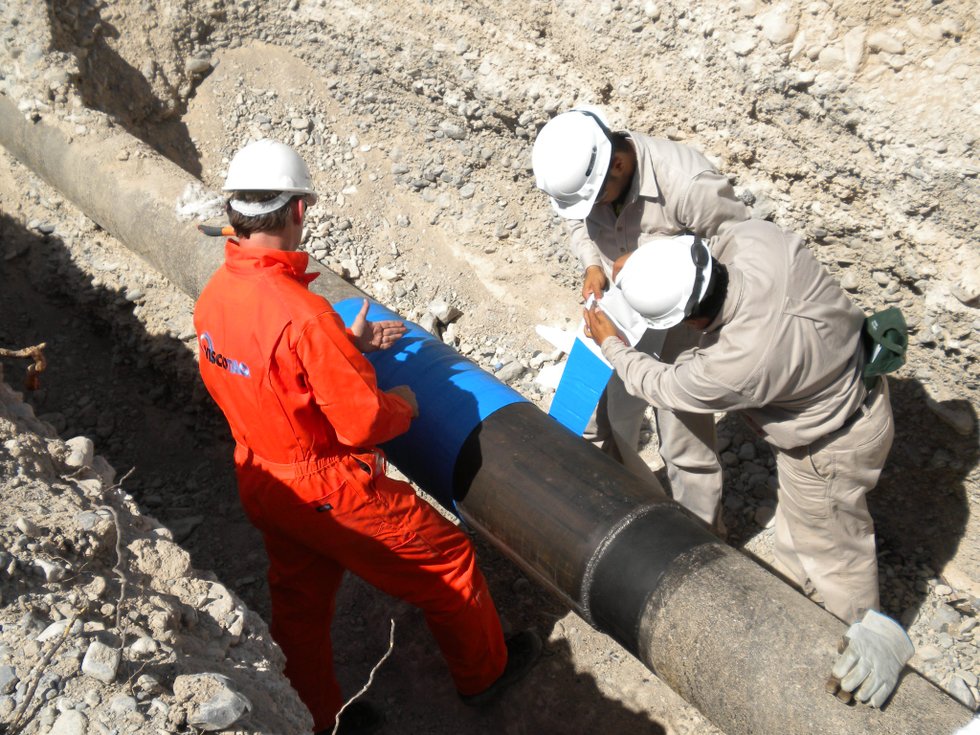
The Viscotaq™ system was easily installed over difficult pipeline legacy coatings with SP2 surface preparation.
A major pipeline rehabilitation program in Mexico has demonstrated how modern visco-elastic coating technology can successfully restore aging pipeline infrastructure while extending operational reliability for more than a decade.
The project, carried out for a North American refinery operating in Mexico, focused on rehabilitating deteriorated sections of product pipelines coated with legacy bitumen and coal-tar systems. Rather than replacing large sections of pipe, engineers sought a field-applied rehabilitation solution capable of bonding directly to aging coatings while maintaining long-term corrosion protection.
The challenge of aging legacy coatings
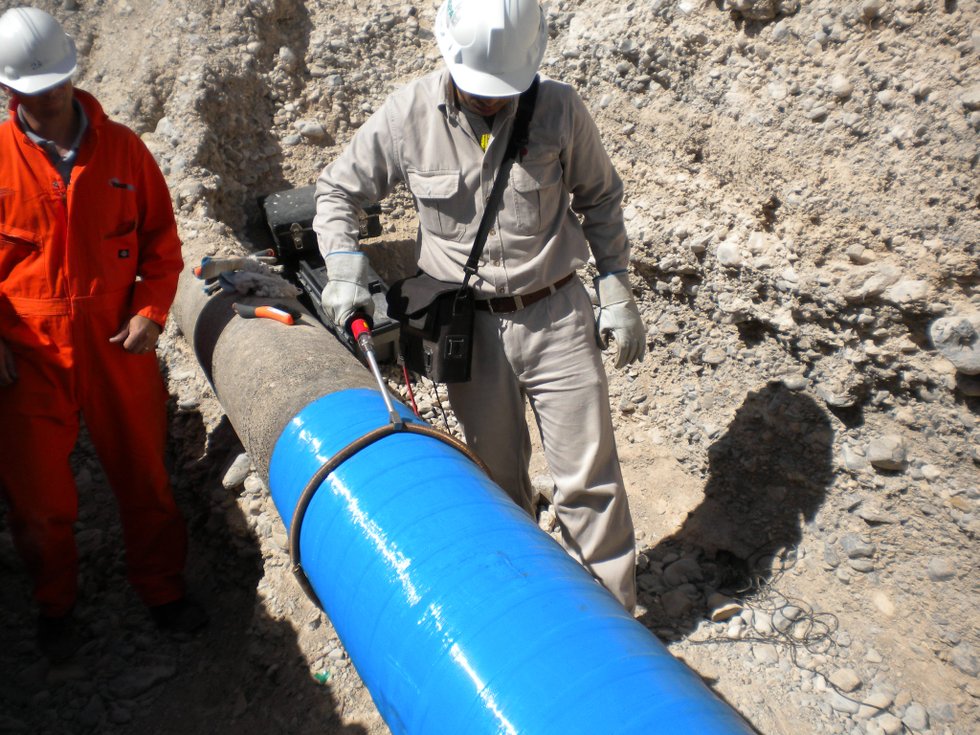
Following rehabilitation, the cathodic protection system was able to function normally again.
Pipeline operators across North America continue to manage aging infrastructure protected by older coating systems such as coal-tar enamel and bitumen. While these coatings were widely used for decades, they can become difficult to maintain as they age, particularly when rehabilitation work must be completed under limited surface preparation conditions.
In this case, one of the project’s primary technical challenges was the requirement for SP2 surface preparation, a hand tool cleaning standard that offers significantly less aggressive preparation than abrasive blasting. Achieving durable adhesion over aged coal-tar coatings under SP2 conditions is often considered difficult because many traditional repair systems require cleaner, roughened surfaces to perform effectively.
The refinery also needed a rehabilitation method that could be deployed efficiently across a broad range of environmental conditions and pipeline diameters without interrupting operations unnecessarily.
Selecting a flexible rehabilitation system
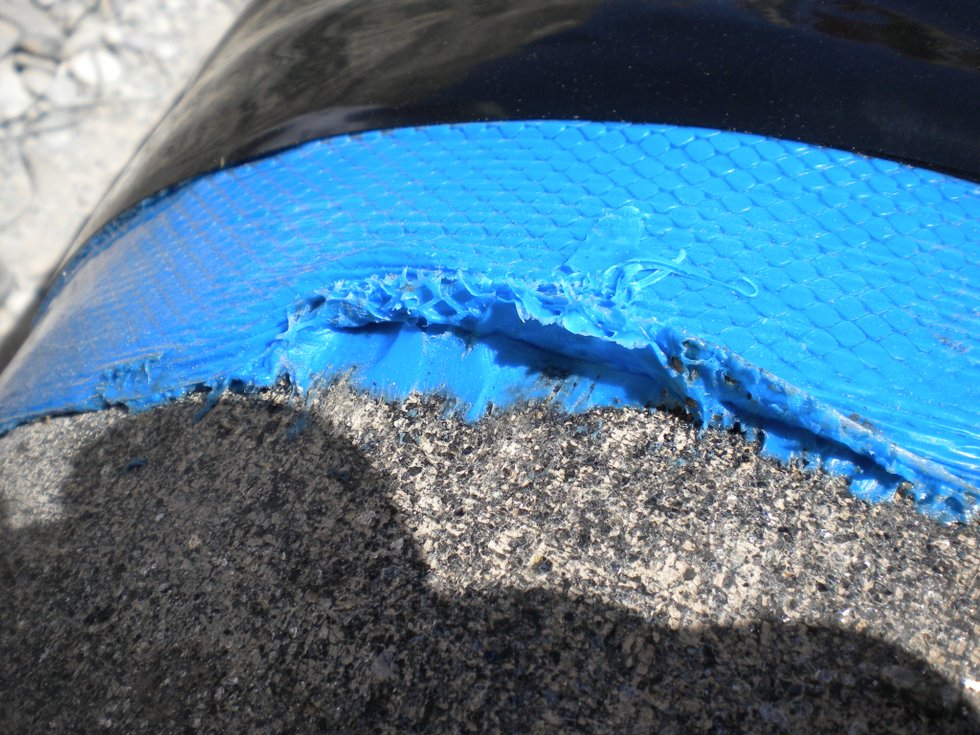
The Denso ViscoWrap HT shows strong adhesion to any existing pipeline coatings.
Project engineers selected Denso’s ViscoWrap HT combined with Viscotaq PE Outerwrap for the rehabilitation work. The visco-elastic material was chosen specifically for its ability to conform to irregular existing coatings and bond through Van der Waals forces, enabling the repair material to integrate directly with the original coating system.
This characteristic created a "seamless, monolithic transition" between the repaired sections and the original coating, reducing the risk of disbondment or coating holidays at transition points.
The system was applied across 12-inch, 16-inch and 24-inch outside diameter product pipelines operating at temperatures ranging from 86°F to 140°F (30°C to 60°C).
Large-scale field deployment
Over the course of the two-year rehabilitation effort, crews applied more than 1 million square feet (100,000 square meters) of the Viscotaq coating system throughout Mexico. The project exposed the materials to a wide variety of field environments and climatic conditions, providing a substantial real-world test of the technology’s performance capabilities.
Restoring cathodic protection performance
One of the project’s most significant outcomes was the restoration of normal cathodic protection system functionality. According to the case study, deteriorated coating conditions prior to rehabilitation had compromised the effectiveness of existing rectifiers and cathodic protection infrastructure. After rehabilitation, the coating repairs significantly improved overall system performance, allowing the cathodic protection system to operate normally again.
This result highlights the close relationship between coating integrity and cathodic protection efficiency. Poor or deteriorated coatings increase current demand and reduce overall corrosion protection effectiveness, while successful rehabilitation can dramatically improve CP system performance without major infrastructure replacement.
A 15-year performance record
Perhaps the most compelling aspect of the project is its long-term performance history. The rehabilitation system has now remained in service for more than 14 years and is approaching 15 years of field performance, according to the published case study.
The documented adhesion performance and successful tie-in to the existing coal tar coatings provide evidence that visco-elastic rehabilitation systems can offer durable long-term solutions for difficult legacy coating environments.
For pipeline operators facing the challenge of extending the life of aging infrastructure, the Mexico refinery project demonstrates that effective rehabilitation may not always require full coating replacement or extensive abrasive blasting. Instead, carefully selected materials designed to integrate with existing systems can provide a practical path toward long-term corrosion protection and operational continuity.
For more information, visit densona.com.