
NOTE: The sponsor of this content may contact you with more information on this topic. Click here to opt-out from sharing your email address with this sponsor. (This link will not unsubscribe you from any other BIC email list).
In diesel and biodiesel production, operators face a challenging reality: process reliability often depends on equipment operating under some of the most demanding conditions in the plant.
Catalytic hydrotreating and desulfurization processes require continuous circulation of process fluids at temperatures exceeding 400°C (752°F) and pressures above 100 bar. Under these conditions, even minor equipment failures can result in costly downtime, production losses, and significant safety risks.
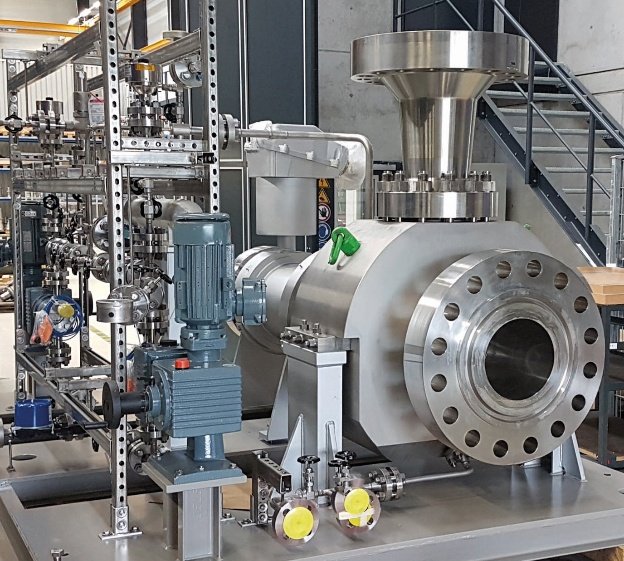
The hidden challenge in biodiesel and renewable fuel production
As renewable diesel and biodiesel production continue to expand across North America, producers are increasingly processing feedstocks with varying quality characteristics. These fluctuations can impact catalyst performance, process stability, and equipment reliability.
The reactor circulation pump plays a critical role in maintaining consistent flow through the catalytic reactor, ensuring uniform contact between the process fluid and catalyst while supporting efficient heat transfer. When pump reliability is compromised, production efficiency and plant safety can be affected immediately.
Why conventional sealing technologies face limitations
In hot oil, renewable diesel, and biodiesel applications, leakage risks are a major concern. Traditional pump designs rely on mechanical seals that are exposed to extreme temperatures, pressures, and potentially abrasive catalyst particles.
Even small seal failures can lead to:
- Unplanned maintenance events
- Product loss
- Environmental emissions
- Increased fire hazards
- Reduced plant availability
These challenges become even more critical in refinery and renewable fuel facilities where continuous operation is essential.
A different approach to process safety
Hermetically sealed canned motor pumps eliminate dynamic shaft seals altogether. By utilizing a completely sealed design, they help prevent product leakage while providing high operational reliability in demanding process environments.
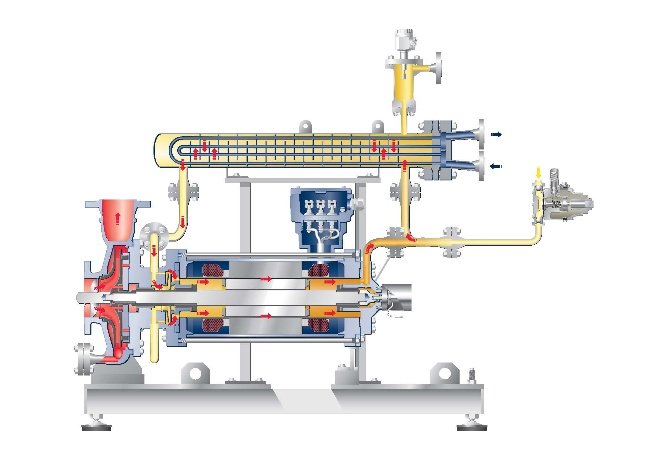
For reactor circulation service, HERMETIC canned motor pumps are designed to handle:
- Temperatures up to 400°C (752°F)
- High-pressure process conditions
- Aggressive and flammable hydrocarbons
- Catalyst-containing process fluids
- Continuous-duty refining applications
The compact design also reduces wear-prone components such as mechanical seals, couplings, and rolling bearings, helping operators minimize maintenance requirements and lifecycle costs.
Improving reliability in critical fuel processing applications
Today’s refinery and renewable fuel operators are focused on maximizing uptime while meeting increasingly stringent safety and environmental requirements.
By combining hermetically sealed technology, advanced monitoring systems, and application-specific engineering, operators can improve process reliability while reducing the risks associated with high-temperature hydroprocessing services.
Learn more
Looking for proven pump technology for renewable diesel, biodiesel, hydroprocessing, or other high-temperature refining applications?
Download the full application report and discover how hermetically sealed canned motor pumps support safer and more reliable fuel production: Pump-technology-biodiesel-production-Press-release-EN.pdf
Contact our Oil & Gas experts: Whiting.Bryan@hermetic-pumpen.com