Genesse McGarity grew up in Indianapolis, not exactly the first city that comes to mind when you think about the Louisiana industrial corridor.
But the path from the Midwest to the Mississippi River, from a Purdue University chemical engineering classroom to the general management of one of the most consequential infrastructure networks on the Gulf Coast, makes a certain kind of sense when you understand who she is and how she works.
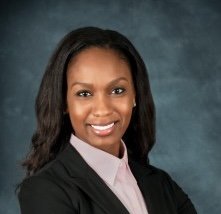
Air Liquide’s McGarity: Follow the work, stay curious, keep saying yes
Genesse McGarity, VP, Commercial - Hydrogen/Syngas & Onsites (North America), Air Liquide
McGarity is vice president, commercial – hydrogen/syngas & onsites, North America at Air Liquide, previously serving as general manager of the company’s Louisiana oxygen, nitrogen and energy networks where she oversaw roughly 500 miles of pipeline running the length of Louisiana’s industrial corridor. The network supplies the oxygen, nitrogen, water and steam that power some of the largest refineries, petrochemical facilities and industrial operations in the country.
A different kind of draw
McGarity did not grow up dreaming about industrial gases. She came to Air Liquide the way a lot of the best people find their careers: drawn to the culture and the opportunity, with the industry following from there.
After graduating from Purdue with a chemical engineering degree, she joined Air Liquide’s rotational engineering program, which moved her through assignments in Texas and California before Louisiana became home. The rotation built a career that moved through merchant business analysis, business management for on-sites, commercial roles in hydrogen and syngas and business development in Louisiana before she stepped into general management. Each stop built something different. The commercial experience gave her a customer lens. The on-sites role gave her operational depth. By the time she moved into her current role, she had seen enough of the business from enough angles to lead it.
"I wasn’t necessarily drawn to the industry itself at first," she said. "I was drawn to Air Liquide’s culture and the opportunity to learn across different parts of the business. The rotational program gave me a foundation I don’t think I could have gotten any other way."
The vascular system
McGarity describes Air Liquide’s Louisiana network as the vascular system of Louisiana’s industrial corridor. It is not a metaphor about size. It is a metaphor about interdependence.
The pipeline connects Air Liquide’s production assets to the refineries, petrochemical plants and manufacturing facilities that depend on a continuous supply of industrial gases. Take any one of those products away from the facilities along the corridor and operations slow down or stop. The network McGarity oversees is woven into the industrial infrastructure of an entire region.
That infrastructure is also growing. Air Liquide is in the middle of a $350 million capital program that includes a new Air Separation Unit and a pipeline expansion to support the development of a Hyundai-POSCO low-carbon steel facility in Louisiana. The investment reflects both confidence in Louisiana’s industrial future and the direction the broader market is moving.
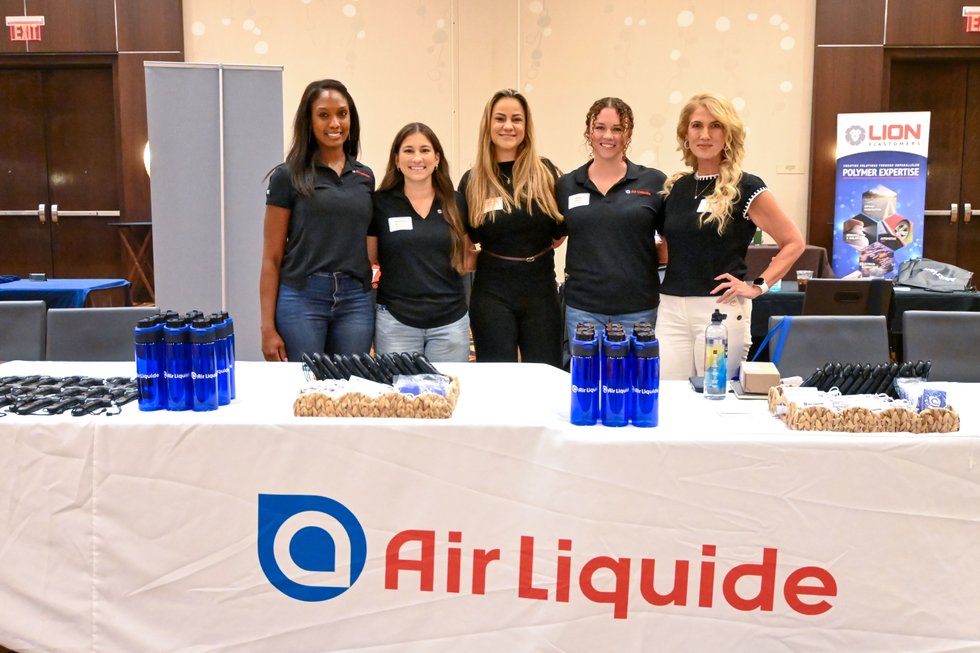
Air Liquide’s McGarity: Follow the work, stay curious, keep saying yes
McGarity and team at LCIA Reverse Trade Show.
"Projects like that are exactly what Louisiana’s industrial future looks like," she said. "We are well positioned because of the infrastructure that already exists and the investments we are making now."
Safety first, every day
McGarity is direct about safety. It is not a program or a campaign. It is the foundation everything else is built on.
Managing 500 miles of active pipeline means managing a network where the consequences of failure are real. Air Liquide’s approach leans on predictive analytics and preventative maintenance, with the goal of finding problems before they become failures. The culture rewards flagging concerns, not burying them.
"Safety is not something you achieve once," she said. "It is something you earn every day through discipline and culture. The work is never done."
What general management actually is
McGarity will tell you that the biggest surprise in moving into general management was learning that the job is not about being the smartest person in the room. It is about making sure the right people are in the room and giving them what they need to do their work well.
Chemical engineers are trained to solve problems, and that expertise is what moves them up. But at a certain level, the job changes. The problems become organizational and strategic rather than technical. The expertise that got you there is not what you need to succeed from there.
"You have to get comfortable with the fact that your job is to empower other people," she said. "You’re not the subject matter expert on everything anymore. You need to create an environment where the right people can do their best work."
McGarity credits the breadth of her rotational career for giving her enough context to manage without needing to micromanage. She has seen enough parts of the business to ask good questions, recognize good answers and know when something does not add up.
Building the workforce
Air Liquide’s approach to workforce development mirrors what brought McGarity in at the beginning: structured programs that give new employees a genuine way to grow. The company partners with local technical colleges to build pipelines into operations and maintenance roles, and rotational programs give early-career professionals exposure to different parts of the business.
McGarity serves on the Louisiana Chemistry Association board and chairs the Louisiana Chemistry Industry Alliance, which puts her in a position to work on workforce and policy issues at a sector level. Modernizing legacy infrastructure, moving permitting processes at the speed industry requires and developing the workforce to support the next generation of capital investment are challenges the entire sector is managing together.
"If someone comes in and doesn’t see a future here, we’ve already lost them," she said. "We try to make a career path in this industry visible from the beginning."
Her father’s lesson
When McGarity talks about the influences that shaped her career, she comes back to her father, who passed away in 2022. He taught her to do what she loves, not to optimize for the next title, but to find work that is genuinely worth doing and give it everything.
She carries that forward in how she leads. She wants the people around her to find what they love in the work, not just to show up for a paycheck.
"He had a way of making things simple without making them simplistic," she said. "That lesson applies to everything. If you love what you’re doing, it shows."

Air Liquide’s McGarity: Follow the work, stay curious, keep saying yes
McGarity family.
McGarity is also the mother of two boys, and she will tell you directly that parenting has made her a better leader. Patience. Adaptability. The ability to hold your own frustration aside long enough to figure out what someone actually needs. Those are skills that translate directly from a household to an operation.
What comes next
McGarity is optimistic about Louisiana. The energy expansion underway along the corridor, the low-carbon manufacturing projects entering the state and the capital flowing into Gulf Coast infrastructure give her reason to be. She is also clear about the challenges: aging infrastructure that needs modernizing, permitting processes that have not kept pace with the market and a workforce still being built to support the next generation of investment.
"Louisiana has a real opportunity right now," she said. "The projects are here. The investment is coming. What we have to do is make sure our infrastructure, our permitting processes and our workforce are ready to support it."
For someone who grew up in Indianapolis and followed curiosity to the banks of the Mississippi River, it is a long way from where the story started. But it tracks when you know her. She followed the work, stayed curious and kept saying yes. The rest took care of itself.
For more information, visit airliquide.com.