
What if the restrooms at high-traffic industrial sites were upgraded with features that improve both hygiene and efficiency?
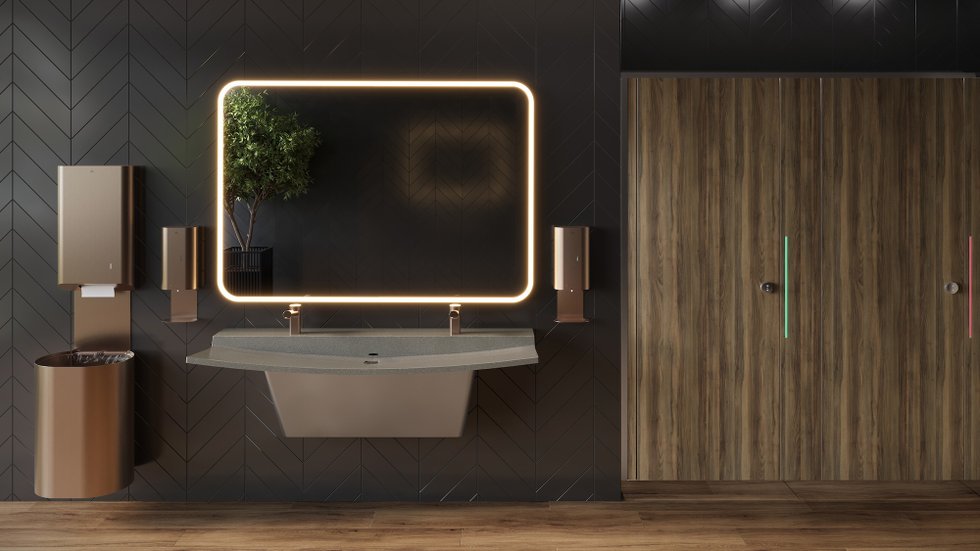
Restroom innovation: What workers in industrial environments value most
In settings like manufacturing plants, terminals, refineries, warehouses and jobsite trailers — where sanitation and break times matter — a few small changes could make a big difference. Think: digital stall availability displays, touchless fixtures, more privacy and enhanced cleanliness through consistent maintenance.
These and other ideas were explored in the 2025 Healthy Handwashing Survey™ by Bradley, a leader in commercial washroom and emergency safety equipment. The annual research surveyed a representative sample of 1,032 U.S. adults from January 3-14, gathering insights into hygiene habits and restroom expectations — especially during peak illness seasons.
According to the findings, 86% of Americans say they’d find value in realtime stall availability displays in high-traffic restrooms. The feature, already in use at some airports, could help reduce wait times and limit unnecessary crowding during breaks — an efficiency gain in any setting where timing matters.
Not all tech upgrades were met with equal enthusiasm. Timers above stalls, like those seen at tourist attraction China’s Yungang Grottoes, were rejected by most respondents. More than half said they would not find them helpful. Women and older adults were the most averse, citing concerns about privacy and comfort.
In fact, privacy remains a top priority for users. Seventy-two percent of respondents said today’s restroom stalls don’t offer enough personal space. More than half want to eliminate door and partition gaps, and nearly as many prefer full-length stall doors that extend to the floor. Occupancy indicators also ranked high, with 44% saying they’d prefer a simple in-use display over the awkward "bend-and-peek" method to check for availability.
Noise reduction may also play a role in comfort. Thirty percent of Americans say they’d like background music or sound suppression features to create a less stressful and more private atmosphere.
Hygiene technology is another top priority. Nearly 80% of respondents said touchless fixtures are important to them, with toilet flushers, soap dispensers and faucets topping the list. Seventy-five percent said touch-free tech improves their overall restroom experience.
Cleanliness doesn’t just impact comfort — it affects a company’s image. Sixty-five percent of Americans said they’re more likely to return to a business with touchless, well-maintained restrooms. In contrast, 84% said they form negative opinions of businesses with dirty or unpleasant facilities.
On average, adults estimate they wash their hands 7.6 times per day. Still, 45% admitted to sometimes rinsing with water only — skipping soap altogether. While that’s concerning, especially in shared environments, there’s good news: 81% say they always wash after using a public restroom, and another 11% usually do. What are the biggest handwashing obstacles? A lack of soap or paper towels.
Flu season has a direct impact on hygiene behaviors. Nearly four out of five Americans say they wash their hands more frequently during outbreaks. Thirty-nine percent reported washing after being near someone sick, and 37% said they wash after sneezing or coughing.
Parents expressed concern over their kids’ hygiene habits, with nearly 40% saying their children don’t wash their hands enough. Dads tend to be more optimistic — 74% think their kids are doing fine, compared to just 51% of moms.
As industrial facilities, jobsite trailers and logistics centers continue to evolve, the restrooms that serve these environments must evolve as well. Bradley’s findings show that modernizing restroom spaces with better privacy, automation and maintenance isn’t just about convenience — it’s about health, safety and efficiency.
Want to know what a restroom says about a business and how to enhance the experience? Contact the team with Bradley to discover smart solutions for industrial facilities.
For more information, visit bradleycorp.com/handwashing.